
CHULU WEST EXPEDITION
Home / CHULU WEST EXPEDITION
moderate

CHULU WEST EXPEDITION

duration icon
Duration
17 Days
altitude icon
Max Altitude
6,419m
group icon
Group Size
Max 2 - 6

Trip Description

Chulu West stands in the Manang District of north-central Nepal, within the Annapurna Conservation Area — the largest protected area in Nepal at 7,629 square kilometres. The conservation area is a natural habitat of extraordinary biodiversity: rhododendron and pine forests at lower elevations give way to alpine meadows and glaciated high terrain, while wildlife including Himalayan blue sheep (bharal), snow leopards, red pandas, and Himalayan tahr inhabit the surrounding landscape. The journey to Chulu West is not just a climb — it is an immersion in one of the most ecologically and culturally significant regions in the country.

The Chulu massif sits above the small valley of the Ghyanchang Khola, tucked north of the main Annapurna Circuit trekking route. From the Manang valley, Chulu West appears as a broad, snow-covered peak with a distinctive profile. The standard approach branches away from the main circuit route at Ledar village and climbs into the side valley leading to Base Camp at 4,900m. The terrain becomes progressively more remote and glaciated as the Base Camp is approached — a genuine transition from trekking to expedition territory.

The summit route follows the Northwest Ridge from High Camp at approximately 5,100m. The ascent involves sustained movement on snow and some icy sections that require crampons and ice axe use throughout. The summit day is long and physically demanding — nine to ten hours of continuous effort at altitude — but the route does not involve the sustained vertical technical climbing of peaks like Ama Dablam or Cholatse. What Chulu West demands more than technical skill is stamina, mental commitment, and respect for the conditions at 6,400 metres.

One of the defining features of the Chulu West expedition is what comes after the summit. Rather than retracing the approach route, the itinerary continues across the Thorong La Pass (5,416m) — one of the highest and most famous mountain passes in the world and descends to the sacred town of Muktinath before continuing through the Mustang region to Tatopani and Pokhara. This circular route gives the Chulu West expedition a narrative arc that very few 6,000-metre climbs in Nepal can match.

Trip Overview

Duration
Duration
17 Days
Including travel days
Max altitude
Max Altitude
6,419m
Summit of CHULU WEST EXPEDITION
Difficulty
Best Season
Spring & Autumn
Ideal climbing window
Group size
Group Size
Max 2 - 6
Small team support
Overview
Overview
Expedition
High-altitude guided climb
Book Now
Phone
Speak to an Expert
9843314253
Free cancellation up to 90 days before departure. No hidden fees.
Trip overview background

Detailed Itinerary

A representative from Alpinist Climber Expeditions meets you at Tribhuvan International Airport and transfers you to your hotel in Kathmandu. After check-in, you meet your expedition guide and fellow team members for the first time. The evening opens with a welcome dinner — a relaxed and informal introduction to the team and the journey that begins the following morning.

Hotel

The morning begins with a full expedition briefing — route overview, safety protocols, equipment checks, permit formalities, and Ministry of Tourism requirements. At the team meeting, you receive your Alpinist Climber Expeditions duffel bag and cap, and confirm packing for the days ahead. The afternoon is spent visiting UNESCO World Heritage Sites in the Kathmandu Valley — ancient temples, Buddhist stupas, and historic Newari architecture that provide a meaningful cultural introduction before the Annapurna journey begins.

Hotel

Departing Kathmandu early by private jeep, the drive takes approximately four to five hours along winding roads through the Nepalese countryside — terraced farmland, river valleys, and rural villages marking the transition from the capital to the mountain world ahead. Besisahar is the traditional starting point for the Annapurna Circuit and the gateway to the Marsyangdi Valley. Overnight in Besisahar to prepare for the long drive into the mountains the following morning.

Lodge

An early start for the drive along the Marsyangdi River valley into the Annapurna region. The road climbs through forested ridges with several dramatic valley sections, offering the first clear views of Lamjung Himal, Annapurna II, and Annapurna IV rising above the treeline. The landscape shifts rapidly from subtropical forest to the drier, more exposed terrain of the upper Marsyangdi as the vehicle climbs to Chame — the administrative centre of Manang District and the starting point for tomorrow's trek.

Lodge

The trek from Chame follows the Marsyangdi River through dense pine and rhododendron forest before emerging at a dramatic curved rock face rising 1,500 metres directly above the river — one of the most striking geological features on the entire Annapurna Circuit. As the valley opens into the broad, flat U-shape of the upper Marsyangdi, the enormous scale of the surrounding massif becomes fully apparent for the first time. Pisang sits at the valley's edge with wide views of Pisang Peak and the high ridges ahead.

Lodge

The trail from Pisang follows the upper valley toward Manang, passing through the celebrated Barge Monastery — the largest in the Manang district and worth a brief stop for its setting and cultural significance. The panoramic views on this section are exceptional: Annapurna II, Annapurna III, Gangapurna, and Tilicho Peak frame the horizon as the trail approaches Manang. The town itself is a well-supplied, characterful hub for climbers and trekkers heading into the high Annapurna terrain.

Lodge

A structured acclimatization day in Manang before the significant altitude gain of the days ahead. A hike to higher ground — toward the ridge above town or the slopes of the surrounding valley — follows the key principle of climbing high and sleeping low. The Himalayan Rescue Association often provides altitude briefings in Manang during the trekking seasons — a useful and practical session that the guide will recommend where available. Rest, hydration, and a good meal in the evening are equally important preparations for what comes next.

Lodge

Leaving Manang, the main Annapurna Circuit trail climbs steadily through high-altitude vegetation — the rhododendron and juniper forest of the lower valley giving way to open alpine terrain dotted with yak grazing grounds. The trail passes through Yak Kharka before reaching Ledar — a small settlement commonly used as a rest stop for teams heading either to the Thorong La or to Chulu West Base Camp. From Ledar, the Chulu West trail branches away from the main circuit and into the side valley to the north.

Lodge

From Ledar, the trail leaves the Annapurna Circuit behind and climbs into the quieter, more remote valley of the Ghyanchang Khola. The terrain becomes increasingly glaciated and rugged as the path gains altitude toward Base Camp at 4,900m — a sheltered location on flat moraine ground with Chulu West's Northwest Ridge visible directly above. Tents are pitched, equipment is organised, and the expedition's climbing phase formally begins. The views of the Annapurna massif from Base Camp on a clear afternoon are already extraordinary.

Camp

After an early breakfast, the team moves upward from Base Camp toward High Camp at approximately 5,100m. The route gains altitude steadily through snow and rocky terrain on the lower Northwest Ridge. High Camp is positioned to provide the shortest and most efficient line to the summit for the following day's push. Tents are pitched, equipment is checked and rechecked, a hot meal and plenty of fluids are taken, and the team rests as early as possible in preparation for the pre-dawn summit start.

Camp

Summit day begins at approximately 3:00am. The team dresses carefully in the darkness, takes a light breakfast, confirms equipment, and begins moving upward by headlamp. The route from High Camp ascends the Northwest Ridge through sustained snow and intermittent icy sections — crampons and ice axe are in use from the outset. The upper mountain opens onto a broad snow plateau that leads toward the summit dome, with the angle steepening on the final approach. Nine to ten hours of continuous effort separate the 3:00am departure from the summit of Chulu West at 6,419 metres.

From the top, the panorama is staggering. Dhaulagiri (8,167m), Annapurna I (8,091m), Annapurna II, III, and IV, Nilgiri, Tilicho, Gangapurna, Manaslu, Himlung, and Pisang Peak fill the southern and eastern horizons, while the vast, brown expanse of the Tibetan Plateau stretches away to the north — a view that takes in two entirely different worlds at once. After time on the summit, the team descends carefully to Base Camp for the night.

Camp

A reserve day built into every Chulu West expedition. High-altitude weather in the Annapurna region can change quickly, and this buffer provides the team with flexibility to attempt the summit on this day if conditions were not suitable on Day 11. If the summit has already been reached, this becomes a rest and recovery day at Base Camp before the descent toward Thorong Phedi begins.

Camp

Breaking Base Camp and descending back to Ledar, the team rejoins the Annapurna Circuit trail and continues eastward toward Thorong Phedi — the last lodge settlement before the Thorong La Pass and the staging point for tomorrow's high-pass crossing. The drop in altitude from Base Camp is immediately welcome and the team rests well in preparation for the long pass day ahead.

Lodge

An early start before dawn for the crossing of Thorong La Pass (5,416m) — one of the highest and most celebrated mountain passes in the world and one of the defining moments of the Annapurna Circuit experience. The ascent from Thorong Phedi to the pass takes three to four hours in typical conditions. From the pass, the Annapurna and Dhaulagiri massifs spread across the horizon in every direction — a fitting final high-altitude panorama after the summit of Chulu West.

The descent to Muktinath is long and steep but well-tracked. Muktinath at 3,710m is one of the most sacred pilgrimage sites in the Himalaya — revered equally by Hindus and Buddhists, its temple complex and natural gas flames have drawn pilgrims for centuries. The team arrives in time to visit the temple and rest before the drive the following morning.

Lodge

A morning drive from Muktinath descends through the dramatic landscape of the Mustang region, passing through the apple-farming village of Marpha — well known for its brandy and orchards — and the regional hub of Jomsom before continuing south through the Kali Gandaki Gorge, one of the deepest gorges in the world. Tatopani, at 1,190m, is named for its natural hot springs — a deeply welcome stop after the exertion of the past several days. The evening is free to soak, rest, and recover.

Lodge

Departing Tatopani, the road winds through the lower Annapurna foothills toward Pokhara — Nepal's second city and one of the most beautiful lake settings in the Himalayan world. The drive takes several hours along roads that improve progressively as the mountains recede. Pokhara sits on the shore of Phewa Lake with Machapuchare (Fishtail) and the Annapurna range rising dramatically behind it. The afternoon is free to explore Lakeside, take a boat on the lake, or simply rest before the flight back to Kathmandu.

Hotel

An early flight returns the team to Kathmandu. The afternoon is free for rest, shopping for souvenirs in Thamel, or a final walk through the city. In the evening, a farewell dinner marks the successful conclusion of the expedition — a celebration of the summit, the Thorong La, and a journey through one of the most culturally and geographically extraordinary regions in the world. A private transfer to the airport is arranged for your outbound flight.

Hotel

Why ACE?

Alpinist Climber Expeditions was built around a principle that has guided every climb we have organized — that the quality of the experience on a mountain is directly tied to the quality and depth of experience of the people leading it. What sets Alpinist Climber Expeditions apart is something that cannot be manufactured or replicated — it comes from decades spent on these mountains, from the culture that formed us, and from a deeply held belief that every climb deserves to be done properly.


We are a team of professional Sherpas. Not guides who have visited the Himalaya — guides who grew up here, who know these peaks in every season, and who have spent careers developing the technical skills and mountain judgment required to lead expeditions safely and successfully.


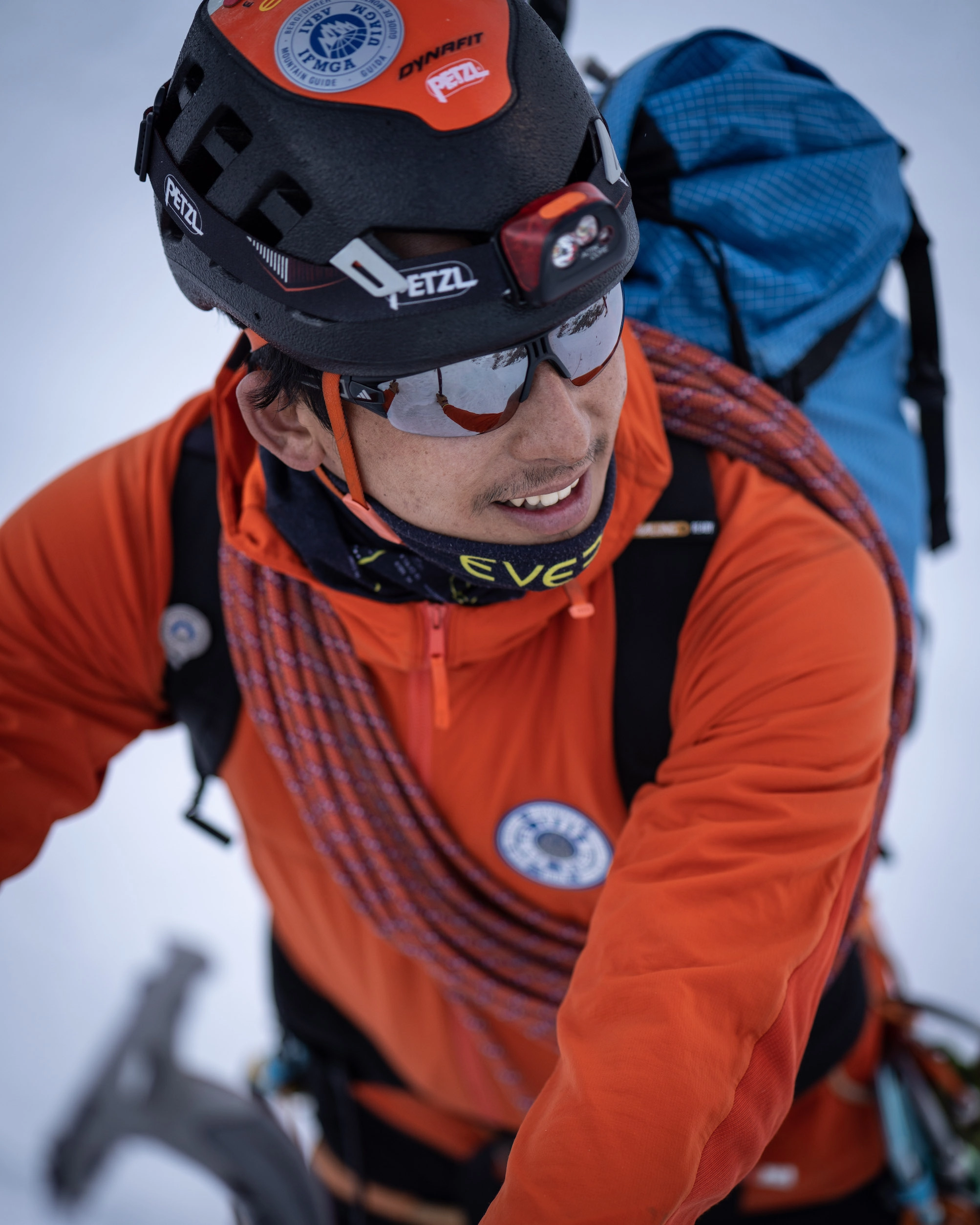
Our team holds IFMGA / UIAGM certification — the highest international standard in professional mountain guiding — alongside Advanced Mountaineering, Wilderness First Aid, Helicopter Rescue, and High-Altitude Rescue qualifications. Our lead guide has summited multiple 8,000-metre peaks, including ascents without supplemental oxygen. This is not a credential on paper. It is a lived capability that directly protects every climber who climbs with us.


We offer two expedition structures: a standard option with small-group expedition, and a premium option with 1:1 guide-to-client ratio. Both are built on the same standard of safety, preparation, and professionalism.The standard option maintains a minimum 1:3 guide-to-client ratio with a dedicated IFMGA lead guide and Sherpa support on every climb. Our premium 1:1 private option places you on the mountain directly alongside IFMGA Guide Mr. Prakash Sherpa.


We do not run high-volume operations as our clients are not bookings. They are climbers who have chosen to trust us with something significant and we take that trust seriously on every single expedition. We do not cut corners on acclimatization, staffing ratios, or safety equipment. We organize expeditions the way they should be organized — with patience, precision, and the kind of local knowledge that only comes from growing up in these mountains and spending a career on them.


The Team

Expedition Guides

Every guide on our team has been selected for their technical ability, high-altitude experience, and personal commitment to the safety and success of every climber they lead. All guides carry extensive experience at altitude and hold a proven record of safety, summit success, and strong compatibility with international clients.

The number of guides assigned to each expedition is determined by the size of the climbing team. Our standard guide-to-member ratio is 1:3, ensuring that every climber receives consistent, attentive support throughout the approach, the acclimatization phase, and the technical climb itself.


Climbing Sherpa Support

A dedicated team of experienced Climbing Sherpas supports every expedition with load carrying on the mountain, route preparation, and high camp management. On summit day, we maintain a 1:1 Sherpa-to-climber ratio — a commitment that reflects our belief that the summit push is where support matters most.

Our Climbing Sherpas are not simply load carriers. They are experienced high-altitude professionals who understand the mountain, the route, and the demands of summit day. Their presence alongside every climber on the final push is a core part of how we manage safety and success on the upper mountain.


What to Expect from Our Team

  • Technically qualified, IFMGA-certified lead guidance on every expedition
  • A standard guide-to-member ratio of 1:3 — adjusted based on team size and peak requirements
  • 1:1 Climbing Sherpa support on summit day for every team member
  • Guides who are experienced, companionable, and genuinely invested in your success
  • Full medical kit, satellite communication, and emergency response capability carried by the team at all times
  • A premium 1:1 private option available — summit alongside Mr. Prakash Sherpa directly


Trip Notes

  • The best seasons for Chulu West are spring (March to May) and autumn (September to November). Spring brings stable weather, warming temperatures, and rhododendron blooms on the lower trail. Autumn offers clear skies and exceptional visibility after the monsoon — October is generally considered the single best month for the summit. Winter climbing is possible but involves extreme cold and deep snow above 5,000m and is not recommended. The monsoon season is not suitable.

  • The expedition runs for 17 days, beginning with drives from Kathmandu into the Annapurna region and concluding with a flight from Pokhara to Kathmandu. The itinerary is circular — no retracing of the approach route.

  • You will stay in comfortable lodges throughout the trekking approach and descent phases. During the climbing phase, accommodation is in tented camps at Base Camp and High Camp. A hotel in Pokhara is included on Day 16.

  • Group size is a minimum of 2 members with 1 IFMGA Mountain Guide, and a maximum of 6 members with 2 IFMGA Mountain Guides. The number of guides is always determined by the size of the team.

  • Chulu West is a physically demanding climb with sections of steep snow and ice that require crampons and ice axe technique throughout the summit day. The summit push begins at approximately 3:00am and involves nine to ten hours of continuous effort. Good cardiovascular fitness and prior experience at altitude are strongly recommended.

  • The crossing of Thorong La Pass (5,416m) on Day 14 is a significant undertaking in itself. An early start is required and the descent to Muktinath is steep and long. The guide manages the pace throughout.

  • Tatopani's natural hot springs on Day 15 are a genuine highlight of the descent — a deeply welcome recovery stop after the demands of the upper mountain.

  • A free duffel bag and baseball cap are provided to every member at the expedition team meeting in Kathmandu. The duffel bag will be used to carry your expedition supplies to Base Camp.

  • You must bring your own daypack or backpack with a waterproof cover for daily use. Use it to carry personal essentials such as cash, important documents, your camera, a notebook, snacks, and a change of clothing.

  • You can leave any luggage that is not needed on the expedition safely at your hotel in Kathmandu. There is no need to carry non-expedition items to Base Camp.

  • Guesthouses along the trekking route may charge a small fee for charging electronic devices such as phones, cameras, and battery packs. Carry a power bank as a backup.

  • Personal travel insurance with high-altitude rescue and medical evacuation coverage is mandatory and must be arranged before departure. Ensure your policy covers peaks above 6,419m.

Equipment List

The list below covers the personal gear essentials for the Chulu West Expedition. The long summit day and sustained high-altitude terrain demand well-fitted, well-tested equipment across every category. All personal items should be sourced and tested well before departure — particularly boots, crampons, and sleeping bag.


Headwear

  • Sun hat or lightweight cap

  • Warm fleece or wool hat

  • UV-protective sunglasses (category 4 recommended)

  • Buff or thin balaclava / face mask


Handwear

  • Lightweight fleece or wool inner gloves

  • Gore-Tex outer mitten gloves


Clothing

  • Gore-Tex waterproof jacket

  • Gore-Tex waterproof trousers

  • Hiking trousers

  • Fleece jacket or warm mid-layer — slim enough to layer under Gore-Tex shell

  • Moisture-wicking base layer top

  • Thermal base layer trousers

  • Down jacket with hood


Footwear

  • Well broken-in trekking boots

  • Double-insulated alpine climbing boots

  • Crampons compatible with alpine boots

  • Snow gaiters

  • Trekking socks (4–5 pairs)

  • Camp sandals or light slippers


Technical Climbing Equipment

  • Ice axe

  • Sit harness

  • Locking carabiners and belay device

  • Ascender (jumar)

  • Climbing helmet


Camping & Trekking Essentials

  • Sleeping bag rated to at least -20°C

  • 45-litre rucksack with rain cover

  • Large duffel bag with padlock (for porter loads)

  • Headlamp with spare batteries

  • 1-litre water bottles (x2)

  • Thermos flask

  • Trekking poles

  • Personal first aid kit


Hygiene & Sun Protection

  • Waterproof wash bag

  • Medium towel

  • Toiletries — soap, toothbrush, toothpaste

  • Sunscreen SPF 50+ including lip balm with sun protection

  • Hand sanitizer and handwash

  • Toilet paper and wet wipes

Includes background

Includes & Excludes

Included
  • Chulu West Peak climbing royalty fees
  • Summit route fixing fees
  • Annapurna Conservation Area Permit (ACAP)
  • TIMS (Trekkers' Information Management System) card
  • Garbage disposal and environmental management fees
  • All government taxes, VAT, and official tourism service charges
  • IFMGA-certified lead mountain guide — full wages and comprehensive insurance
  • Experienced Climbing Sherpa support — wages, summit bonus, full insurance, and equipment
  • Porters to carry trekking and expedition gear at a 1:1 member-to-porter ratio
  • All staff accommodation, wages, equipment, insurance, and medical provisions
  • 4-star hotel accommodation in Kathmandu with daily breakfast, welcome dinner, and farewell dinner (2 nights)
  • Hotel accommodation in Pokhara with breakfast (1 night)
  • Full-board lodge accommodation throughout the trekking approach and descent
  • High-altitude camp food for all members and guides during the climbing phase
  • Private jeep both ways — Kathmandu to Besisahar and return from Pokhara
  • Private vehicle airport pick-up and drop-off in Kathmandu
  • Domestic flight: Pokhara to Kathmandu on Day 17
  • Single private dome tent at Base Camp
  • High Camp tents shared between members and guides
  • Medical kit carried throughout the expedition
  • Satellite phone for emergency communication
  • Alpinist Climber Expeditions branded duffel bag, cap, and T-shirt per member
x Not Included
  • × International airfare (to and from Kathmandu)
  • × Nepal entry visa fees
  • × Lunches and dinners in Kathmandu outside of the included welcome and farewell dinners
  • × Alcoholic and soft beverages
  • × Internet and WiFi access
  • × Personal clothing and climbing equipment
  • × Personal first aid kit
  • × Drone permit fees (if applicable)
  • × Personal travel, medical, and emergency rescue insurance
  • × Gratuities for guides, Climbing Sherpa, Base Camp staff, and porters

1:1 Experience with Your Lead Guide

Lead Guide

Prakash Sherpa

CEO

Our lead guide Prakash Sherpa oversees expedition strategy, pacing, and on-mountain decision-making so your climb is supported from preparation through summit push.

You get direct access to experienced guidance, real-time judgement in changing conditions, and a more focused expedition experience built around safety, clarity, and strong leadership.

IFMGA

Package Options

Normal Package

The Full Experience

USD 2,750
per person / twin sharing
  • 20-day guided expedition
  • All meals during trek
  • IFMGA-certified lead guide
  • 1 assistant guide
  • Teahouse/lodge accommodation
  • All permits and park fees
  • 2 porters per client
  • Group first aid kit
  • Emergency oxygen supply
  • Kathmandu airport transfers
  • All trekking route transport
  • Welcome & farewell dinners
  • Summit certificate
  • ACE expedition duffel bag
Book Standard
Premium Package

The Full Experience

USD 2,750
per person / twin sharing
  • 20-day guided expedition
  • All meals during trek
  • IFMGA-certified lead guide
  • 1 assistant guide
  • Teahouse/lodge accommodation
  • All permits and park fees
  • 2 porters per client
  • Group first aid kit
  • Emergency oxygen supply
  • Kathmandu airport transfers
  • All trekking route transport
  • Welcome & farewell dinners
  • Summit certificate
  • ACE expedition duffel bag
Book Premium

FAQs

Chulu West (6,419m) is a peak in the Annapurna region of north-central Nepal, located north of Manang in the Manang District within the Annapurna Conservation Area. It is part of the Chulu massif, which also includes Chulu East (6,584m) and Chulu Far East. Of the three peaks, Chulu West is the most popular climbing objective — it is the most accessible in terms of technical difficulty, though it is by no means an easy ascent. The mountain was first summited in 1952 by a Japanese team and offers one of the widest summit panoramas available on any 6,000-metre peak in Nepal.

ACE mountain background
N
Client Stories

From the Summit

Expedition Journal

Dispatches from the Mountains

All Articles
High Altitude Kit List: What our IFMGA Guides Actually Carry
Expedition Report

High Altitude Kit List: What our IFMGA Guides Actually Carry

Climbing at high altitude demands more than strength and determination — it requires the right equipment, careful preparation, and the ability to respond to changing mountain conditions. Our IFMGA-certified mountain guides carry specialized gear not only for their own safety but for the well-being of the entire team. Their packs are carefully organized with technical climbing equipment such as harnesses, helmets, crampons, ice axes, carabiners, ascenders, descenders, and safety slings, allowing them to manage steep snow, ice, and glacier terrain. Depending on the route, they may also carry snow pickets, ice screws, and extra rope for protection and rescue situations. Safety Safety is always the top priority, so guides include a comprehensive high-altitude first aid kit, emergency bivy sack, crevasse rescue gear, and reliable communication devices such as satellite phones or radios. Navigation tools like GPS units and altimeter watches help maintain route accuracy, especially in poor visibility. Proper clothing is equally critical in extreme environments, and guides rely on a layering system that includes moisture-wicking base layers, insulating mid-layers, expedition-weight down jackets, and waterproof outer shells. They also carry multiple gloves, glacier sunglasses, goggles, and face protection to guard against wind, cold, and intense UV exposure. Navigation & Planning Tools Even on established routes, visibility can drop suddenly due to storms or whiteouts. Guides carry: Detailed route knowledge and maps GPS waypoints Weather updates via communication devices Climbing plan with turnaround times Decision-making tools are just as important as physical gear. At high altitude, the smallest item can make a life-saving difference. Our IFMGA guides pack with purpose, balancing weight with safety and efficiency. Their experience ensures that nothing essential is left behind — because in the mountains, preparation is everything.
Sep 15, 2025 Read Article →
Stay Connected