
HIMLUNG HIMAL SKI EXPEDITION
Home / HIMLUNG HIMAL SKI EXPEDITION
moderate

HIMLUNG HIMAL SKI EXPEDITION

duration icon
Duration
25 Days
altitude icon
Max Altitude
7,126m
group icon
Group Size
Max 2 - 10

Trip Description

Himlung Himal sits in the Peri Himal range of western Nepal, sharing its high ground with the Tibet border to the north and the Nar-Phu Valley to the south. The mountain was first summited in 1992 by a Japanese team, and its relative youth as a climbing objective, combined with the restricted area permit required for the approach — means it sees a fraction of the traffic that many comparable peaks receive. That remoteness is a significant part of its appeal.


The Nar-Phu Valley, through which the approach runs, is one of the last genuinely off-the-beaten-path corridors in Nepal's trekking landscape. A special restricted area permit is required to enter, which keeps visitor numbers low and the valley's character remarkably intact. Nar and Phu villages — high-altitude settlements with Tibetan Buddhist cultural roots offer a window into a way of life that has changed very little over generations. The mani walls, prayer flags, ancient gompas, and dry stone architecture of these villages are as striking as anything on the mountain above them.


The climbing route ascends from Base Camp at 4,850m through two established camps, gaining altitude steadily on terrain that is challenging but not severely technical by 7,000m standards. The primary challenges are altitude and stamina rather than extreme technical difficulty — a profile that suits experienced mountaineers who are not necessarily high-level alpinists but who are fit, acclimatized, and well-prepared. The upper slopes that form the ski descent are broad, consistent, and offer an unobstructed line back down toward the glacier below — conditions that are rare at this altitude.


The ski descent from the summit region is the expedition's centrepiece. On clean snow in good conditions, the upper slopes of Himlung offer several hundred metres of high-altitude skiing with a view that extends across some of the most impressive mountain terrain in the world. It is a moment that requires months of preparation and thousands of metres of ascent to reach — and one that stays with everyone who experiences it.

Trip Overview

Duration
Duration
25 Days
Including travel days
Max altitude
Max Altitude
7,126m
Summit of HIMLUNG HIMAL SKI EXPEDITION
Difficulty
Best Season
Spring & Autumn
Ideal climbing window
Group size
Group Size
Max 2 - 10
Small team support
Overview
Overview
Expedition
High-altitude guided climb
Book Now
Phone
Speak to an Expert
9843314253
Free cancellation up to 90 days before departure. No hidden fees.
Trip overview background

Detailed Itinerary

A representative from Alpinist Climber Expeditions meets you at Tribhuvan International Airport and transfers you to your 4-star hotel in Kathmandu. In the evening, the full team gathers for a welcome dinner — the first chance to meet your guide and fellow expedition members before the journey into the mountains begins.

Hotel

A full expedition briefing covers the route, camp structure, skiing logistics, safety protocols, acclimatization plan, and permit formalities for the restricted Nar-Phu Valley. You receive your Alpinist Climber Expeditions duffel bag, cap, and T-shirt, and confirm equipment ahead of the drive west. Ski equipment is checked and any last-minute adjustments made before departure.

Hotel

An early private jeep departs Kathmandu heading west along the Prithvi Highway toward Besisahar — the gateway to the Annapurna region and the starting point for the trail north into the Nar-Phu Valley. The drive takes most of the day through lush lowland countryside before the valley begins to narrow and the mountains close in from both sides.

Lodge

The road continues north from Besisahar, climbing steadily through the Marsyangdi River valley. Koto is the last village before the restricted Nar-Phu area begins — permits are checked here before entry. The landscape changes noticeably above Koto: drier, more austere, and increasingly Tibetan in character.

Lodge

The trail enters the Nar-Phu Valley proper, following the Phu Khola upstream through a dramatic narrow gorge. The terrain is stark and strikingly beautiful — towering cliff walls, glacial streams, and the occasional mani wall or chorten marking the way. Meta is a small seasonal settlement used as a rest point for expeditions heading further up the valley. The altitude gain is modest but the trail is rugged.

Lodge

The trail continues to Phu Gaon — one of the most remote and intact traditional villages in Nepal. Stone houses, butter lamps, ancient gompas, and prayer flag strings strung across narrow lanes create an atmosphere that feels genuinely removed from the modern world. The village sits at 3,900m against a backdrop of high peaks and open sky. This is a place worth spending time in, and the stay here before Base Camp is one of the quieter highlights of the expedition.

Lodge

A structured acclimatization day in Phu Gaon before the ascent to Base Camp. A morning hike above the village to approximately 4,200–4,400m follows the classic principle of climbing high and sleeping low, helping the body begin adjusting to the reduced oxygen at altitude. The afternoon is spent resting, exploring the village, or visiting the local gompa. Proper hydration and rest are the priorities.

Lodge

From Phu Gaon, the trail climbs steadily onto open moraine and glacier margin terrain. Himlung Himal comes into full view as altitude is gained — its broad upper slopes and summit visible above the surrounding ridgelines, the skiable terrain clearly apparent from this angle. Base Camp at 4,850m is established on solid ground at the head of the valley. Tents are pitched, equipment is organized, and the climbing phase of the expedition formally begins.

Camp

The Puja ceremony is conducted at Base Camp — a traditional Sherpa blessing ritual led by a lama, attended by the full team. All climbing and skiing equipment is blessed before use on the mountain. This ceremony is an authentic part of every expedition we organize and one of the most memorable moments of the journey. The rest of the day is dedicated to rest, equipment sorting, and settling into life at altitude.

Camp

An IFMGA guide leads a technical session at Base Camp covering the mountain-specific skills for this expedition — crampon technique, ice axe use, fixed rope management on glacier terrain, and crucially, ski preparation for high-altitude conditions. Skins are fitted and tested, bindings are adjusted, and the team skis on terrain near Base Camp to familiarize equipment and technique before the higher slopes. Any concerns about equipment are addressed here before they become problems higher up.

Camp

The team makes a controlled push to approximately 5,300m before returning to Base Camp. This rotation confirms equipment function at altitude, familiarizes the team with the lower section of the route, and initiates the physiological acclimatization process above Base Camp. An early return ensures recovery without unnecessary fatigue.

Camp

A rest day at Base Camp. The body consolidates its adaptation to altitude. The team eats, rests, hydrates, and prepares for the move to Camp 1 the following morning. The guide reviews weather forecasts and confirms the climbing plan.

Camp

The team ascends from Base Camp to Camp 1 at 5,800m — moving through glaciated terrain and crossing the lower section of the glacier with skis on packs. Camp 1 is a well-positioned camp on the upper glacier, with the summit slopes of Himlung now clearly visible above. Tents are pitched, a hot meal prepared, and the team rests with Camp 2 the objective for the following morning.

Camp

The route from Camp 1 to Camp 2 crosses more demanding terrain — steeper slopes with crevassed glacier sections and exposed ridgeline movement requiring rope management and careful footwork. Camp 2 at 6,400m is the final high camp and the launch point for the summit push and ski descent. Hot food and drinks are prepared on arrival. The team rests carefully, eating well and staying fully hydrated in preparation for the summit day.

Camp

A dedicated reserve day built into every Himlung Himal Ski Expedition. Conditions at 7,000m are inherently unpredictable, and this buffer ensures the team can wait for a clean weather window without compromising the summit opportunity. All decisions at this stage are made by the expedition leader based on real-time weather data, route conditions, and team readiness. If conditions are favorable on Day 15, the leader may choose to summit a day early and use Day 16 as the descent day.

Camp

Summit day begins in the early hours from Camp 2. The team moves upward in the darkness with headlamps and crampons, ascending the upper slopes of Himlung on foot — the terrain above Camp 2 is steep enough that skis are carried or left at a transition point. The final push to the summit at 7,126m is demanding but the angle eases as the broad summit plateau comes into reach.

From the summit, the Annapurna range fills the horizon to the south and west — Annapurna I, II, III, and IV, Gangapurna, and Manaslu all within view. The Tibetan plateau stretches to the north. After time at the top, the ski descent begins — skins removed, bindings adjusted, and skis pointed downward onto the upper slopes of Himlung Himal. The descent covers the most consistent and open terrain on the mountain, dropping several hundred metres on skiable snow with an extraordinary mountain panorama on every side. The team skis to the transition point above Camp 1, then continues on foot or skis to Camp 1 for the night.

Camp

From Camp 1, the team descends on skis and foot back to Base Camp. The lower slopes allow a final stretch of skiing before the glacier gives way to moraine and the tents of Base Camp come into view. Base Camp is broken down over the rest of the day in preparation for the return trek beginning the following morning.

Camp

The team leaves Base Camp and descends to Phu Gaon. The altitude drop is immediately felt — breathing is easier, the pace is comfortable, and the warmth of the lower valley is a welcome change after days above 5,000m. A final evening in one of the most remote villages in Nepal before the return journey continues.

Lodge

The trail continues down the Nar-Phu Valley, retracing the approach route in reverse through the gorge and the dry high-altitude terrain above Koto. The walk out has a different quality to the walk in — faster, lighter, and viewed from the perspective of people who have been to the top.

Lodge

The descent continues to Koto, where the restricted area ends and the broader Annapurna approach rejoins the main route. Porters and mules who carried loads through the valley are thanked and bid farewell here.

Lodge

The final trekking day descends steeply through the Marsyangdi River valley back to Besisahar. The altitude drop is dramatic and the vegetation — lush and green compared to the high valley above — marks the full transition out of the mountain world.

Lodge

A private jeep returns the team to Kathmandu — a long but comfortable drive through the Prithvi Highway corridor. The city arrives in the early evening, and 4-star hotel accommodation provides a genuine contrast to the weeks spent at altitude.

Hotel

A free day in Kathmandu for recovery, exploration, and shopping. The city's temples, markets, and restaurants are all accessible. An optional guided city tour of UNESCO-listed heritage sites can be arranged on request.

Hotel

A buffer day in Kathmandu providing flexibility for flight adjustments, additional rest, or any final arrangements before departure. This day ensures no pressure on international connections.

Hotel

Private airport transfer is arranged for your outbound flight. The Himlung Himal Ski Expedition concludes — a 25-day journey through one of Nepal's most remote valleys to the summit and ski descent of a 7,000-metre peak. Few expeditions anywhere in the world offer this specific combination of altitude, cultural immersion, and ski mountaineering at this level.

Why ACE?

Alpinist Climber Expeditions was built around a principle that has guided every climb we have organized — that the quality of the experience on a mountain is directly tied to the quality and depth of experience of the people leading it. What sets Alpinist Climber Expeditions apart is something that cannot be manufactured or replicated — it comes from decades spent on these mountains, from the culture that formed us, and from a deeply held belief that every climb deserves to be done properly.


We are a team of professional Sherpas. Not guides who have visited the Himalaya — guides who grew up here, who know these peaks in every season, and who have spent careers developing the technical skills and mountain judgment required to lead expeditions safely and successfully.


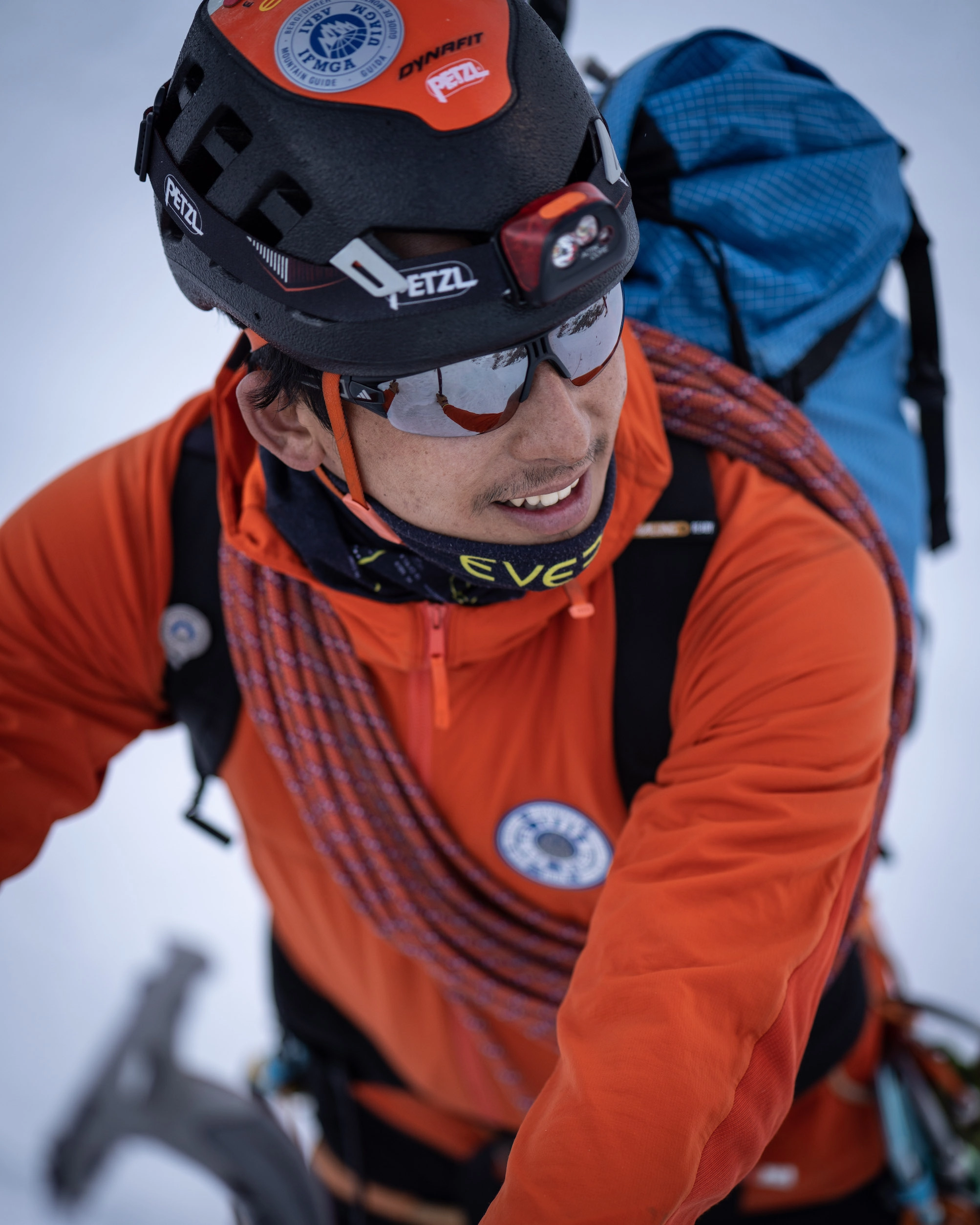
Our team holds IFMGA / UIAGM certification — the highest international standard in professional mountain guiding — alongside Advanced Mountaineering, Wilderness First Aid, Helicopter Rescue, and High-Altitude Rescue qualifications. Our lead guide has summited multiple 8,000-metre peaks, including ascents without supplemental oxygen. This is not a credential on paper. It is a lived capability that directly protects every climber who climbs with us.


We offer two expedition structures: a standard option with small-group expedition, and a premium option with 1:1 guide-to-client ratio. Both are built on the same standard of safety, preparation, and professionalism.The standard option maintains a minimum 1:3 guide-to-client ratio with a dedicated IFMGA lead guide and Sherpa support on every climb. Our premium 1:1 private option places you on the mountain directly alongside IFMGA Guide Mr. Prakash Sherpa.


We do not run high-volume operations as our clients are not bookings. They are climbers who have chosen to trust us with something significant and we take that trust seriously on every single expedition. We do not cut corners on acclimatization, staffing ratios, or safety equipment. We organize expeditions the way they should be organized — with patience, precision, and the kind of local knowledge that only comes from growing up in these mountains and spending a career on them.


The Team

Expedition Guides

Every guide on our team has been selected for their technical ability, high-altitude experience, and personal commitment to the safety and success of every climber they lead. All guides carry extensive experience at altitude and hold a proven record of safety, summit success, and strong compatibility with international clients.

The number of guides assigned to each expedition is determined by the size of the climbing team. Our standard guide-to-member ratio is 1:3, ensuring that every climber receives consistent, attentive support throughout the approach, the acclimatization phase, and the technical climb itself.


Climbing Sherpa Support

A dedicated team of experienced Climbing Sherpas supports every expedition with load carrying on the mountain, route preparation, and high camp management. On summit day, we maintain a 1:1 Sherpa-to-climber ratio — a commitment that reflects our belief that the summit push is where support matters most.

Our Climbing Sherpas are not simply load carriers. They are experienced high-altitude professionals who understand the mountain, the route, and the demands of summit day. Their presence alongside every climber on the final push is a core part of how we manage safety and success on the upper mountain.


What to Expect from Our Team

  • Technically qualified, IFMGA-certified lead guidance on every expedition
  • A standard guide-to-member ratio of 1:3 — adjusted based on team size and peak requirements
  • 1:1 Climbing Sherpa support on summit day for every team member
  • Guides who are experienced, companionable, and genuinely invested in your success
  • Full medical kit, satellite communication, and emergency response capability carried by the team at all times
  • A premium 1:1 private option available — summit alongside Mr. Prakash Sherpa directly


Trip Notes

  • The best seasons for the Himlung Himal Ski Expedition are spring (March to May) and autumn (September to November). Spring offers stable weather, consistent snow on the upper slopes, and the most reliable summit windows. Autumn brings excellent visibility after the monsoon and firm snow conditions, though temperatures are cooler above 5,000m. Winter and monsoon are not suitable for this expedition.

  • The expedition runs for 25 days, including the road approach, the full Nar-Phu Valley trek, the Base Camp acclimatization and training phase, the climbing and skiing period, and the return to Kathmandu.

  • Accommodation during the approach and descent is in lodges on full board. At Base Camp, each member has a single private tent. Above Base Camp, accommodation is in shared expedition tents at Camp 1 (5,800m) and Camp 2 (6,400m).

  • Group size is a minimum of 2 members with 1 IFMGA Mountain Guide, and a maximum of 10 members with 2 IFMGA Mountain Guides. The number of guides is always determined by the size of the team.

  • This expedition requires both solid high-altitude mountaineering experience and strong skiing ability on steep, variable mountain terrain. Prior experience above 5,000m or 6,000m is strongly recommended. Ski ability should include confident skiing on slopes of 30–45 degrees in challenging snow conditions.

  • Ski equipment — including boots, bindings, skins, and skis — is the personal responsibility of each member. All equipment should be tested and confirmed before arrival in Nepal.

  • A special restricted area permit is required for the Nar-Phu Valley and is included in the package. This permit keeps visitor numbers low and the valley's character intact — one of the defining features of this expedition.

  • A free duffel bag, baseball cap, and T-shirt are provided to every member at the expedition team meeting in Kathmandu. The duffel bag is used to carry expedition supplies carried by porters and mules.

  • Bring your own daypack with a waterproof cover for daily use on the trek. Non-expedition luggage can be stored safely at your hotel in Kathmandu.

  • Guesthouses along the trekking route may charge a small fee for charging electronic devices. Carry a power bank as a backup.

  • Personal travel insurance with high-altitude rescue and medical evacuation coverage is mandatory and must be confirmed before departure. Ensure your policy covers ski mountaineering at altitudes above 7,126m including helicopter rescue.

Equipment List

Himlung Himal is a ski mountaineering expedition at 7,000m. Every item on this list should be tested in the field before departure — both the mountaineering gear and the ski equipment. Ski bindings should be set up and tested on steep terrain before arriving in Nepal. Do not bring any equipment you have not already used in demanding mountain conditions.


Ski Equipment

  • Touring or freeride skis appropriate for 30–45 degree slopes

  • Alpine touring (AT) bindings — properly fitted and tested before departure

  • Skins for uphill travel on all ascent phases

  • Ski boots compatible with AT bindings and appropriate for high altitude

  • Ski poles with interchangeable baskets — powder and hardpack

  • Ski helmet — required throughout the climbing and skiing phase

  • Ski crampons — recommended for the steeper approach sections


Headwear

  • Sun hat or lightweight cap

  • Warm fleece or wool hat

  • Balaclava or thin face mask

  • UV-protective sunglasses — category 4 strongly recommended

  • Ski goggles with UV protection and anti-fog system — essential for the ski descent


Handwear

  • Thin liner gloves

  • Fleece or wool mid-layer gloves

  • Gore-Tex or waterproof insulated outer gloves

  • Down mittens — recommended for the summit push


Clothing

  • Expedition-quality down jacket

  • Waterproof Gore-Tex jacket

  • Waterproof over-trousers

  • Fleece jacket or softshell mid-layer

  • Fleece or insulated trousers

  • Thermal base layer — top and bottom

  • Moisture-wicking base layer tops (2–3)

  • Light down or synthetic insulated jacket for camp use


Footwear

  • High-altitude ski touring boots (AT-compatible, insulated)

  • Trekking boots for the approach and lower camps

  • Camp shoes or light slippers

  • Warm mountaineering socks (3–4 pairs)

  • Lightweight liner socks (2–3 pairs)

  • Snow gaiters


Technical Climbing Equipment

  • UIAA-approved climbing helmet (can double as ski helmet if rated for both)

  • Sit harness

  • Ascender (jumar)

  • Descending device

  • Locking carabiners (4 minimum)

  • Non-locking carabiners (2)

  • Ice axe — classic alpine type

  • Crampons compatible with ski touring boots

  • Trekking poles


Sleeping Equipment

  • Sleeping bag rated to -20°C to -30°C

  • Sleeping mat or Thermarest

  • Sleeping bag liner — optional but recommended


Camping & Trekking Essentials

  • 45–65 litre rucksack with rain cover

  • Large duffel bag with padlock (for porter and mule loads)

  • Headlamp with spare batteries

  • 1-litre water bottles (x2)

  • 1-litre thermos flask

  • Personal first aid kit

  • Swiss army knife or multi-tool

  • Personal snacks and energy bars


Hygiene & Sun Protection

  • Waterproof wash bag

  • Medium towel

  • Toiletries — soap, toothbrush, toothpaste

  • Sunscreen SPF 50+ and lip balm with UV protection — critical at this altitude

  • Hand sanitizer

  • Wet wipes and toilet paper

Includes background

Includes & Excludes

Included
  • Himlung Himal climbing and ski expedition permit fees
  • Nar-Phu Valley restricted area permit fees
  • Annapurna Conservation Area permit fees
  • Garbage disposal and environmental management fees
  • All government taxes, VAT, and official tourism service charges
  • IFMGA-certified lead mountain guide with ski mountaineering qualifications — full wages and comprehensive insurance
  • Assistant guide — wages and full insurance
  • Porters and mules to carry trekking and expedition gear at a 1:1 member-to-porter ratio
  • All staff accommodation, wages, equipment, insurance, and medical provisions
  • 4-star hotel accommodation in Kathmandu with daily breakfast (3 nights)
  • Full-board lodge accommodation during the trekking approach and descent
  • Single tent per member at Base Camp
  • High camp tents and EPI gas at all climbing camps
  • Private jeep transfer: Kathmandu to Koto and return (both ways)
  • Private vehicle airport transfers in Kathmandu — pick-up and drop-off
  • Welcome dinner on Day 01 in Kathmandu
  • Daily breakfast at 4-star hotel in Kathmandu
  • Full-board meals during the trekking and approach phase
  • Unlimited food, drinks, and snacks at Base Camp for members and guides
  • High-altitude food for members and guides at all high camps
  • Group walkie-talkie radios for team coordination throughout the expedition
  • Medical kit carried throughout the expedition
  • Satellite phone for emergency communication
  • Alpinist Climber Expeditions branded duffel bag, cap, and T-shirt per member
x Not Included
  • × International airfare (to and from Kathmandu)
  • × Nepal entry visa fees
  • × Lunches and dinners in Kathmandu — meals outside of the included welcome dinner and breakfasts
  • × Alcoholic and soft beverages
  • × Internet and WiFi access
  • × Personal clothing, climbing equipment, and all personal ski equipment
  • × Personal first aid kit
  • × Special drone permit fees
  • × Personal travel, medical, and emergency rescue insurance
  • × Gratuities for guides, Climbing Sherpa, and porters

1:1 Experience with Your Lead Guide

Lead Guide

Prakash Sherpa

CEO

Our lead guide Prakash Sherpa oversees expedition strategy, pacing, and on-mountain decision-making so your climb is supported from preparation through summit push.

You get direct access to experienced guidance, real-time judgement in changing conditions, and a more focused expedition experience built around safety, clarity, and strong leadership.

IFMGA

Package Options

Normal Package

The Full Experience

USD 2,750
per person / twin sharing
  • 20-day guided expedition
  • All meals during trek
  • IFMGA-certified lead guide
  • 1 assistant guide
  • Teahouse/lodge accommodation
  • All permits and park fees
  • 2 porters per client
  • Group first aid kit
  • Emergency oxygen supply
  • Kathmandu airport transfers
  • All trekking route transport
  • Welcome & farewell dinners
  • Summit certificate
  • ACE expedition duffel bag
Book Standard
Premium Package

The Full Experience

USD 2,750
per person / twin sharing
  • 20-day guided expedition
  • All meals during trek
  • IFMGA-certified lead guide
  • 1 assistant guide
  • Teahouse/lodge accommodation
  • All permits and park fees
  • 2 porters per client
  • Group first aid kit
  • Emergency oxygen supply
  • Kathmandu airport transfers
  • All trekking route transport
  • Welcome & farewell dinners
  • Summit certificate
  • ACE expedition duffel bag
Book Premium

FAQs

Himlung Himal's upper slopes are broad, consistent, and skiable at a gradient that rewards genuine ski mountaineering without requiring extreme technical skiing ability. The summit region offers several hundred metres of high-altitude descent on open terrain, with views across the Annapurna and Manaslu ranges throughout. At 7,126m, it is one of the highest peaks in Nepal that can realistically be descended on skis — combining the altitude and challenge of a serious Himalayan objective with the specific reward of a ski descent that very few people have ever experienced.

ACE mountain background
N
Client Stories

From the Summit

Expedition Journal

Dispatches from the Mountains

All Articles
High Altitude Kit List: What our IFMGA Guides Actually Carry
Expedition Report

High Altitude Kit List: What our IFMGA Guides Actually Carry

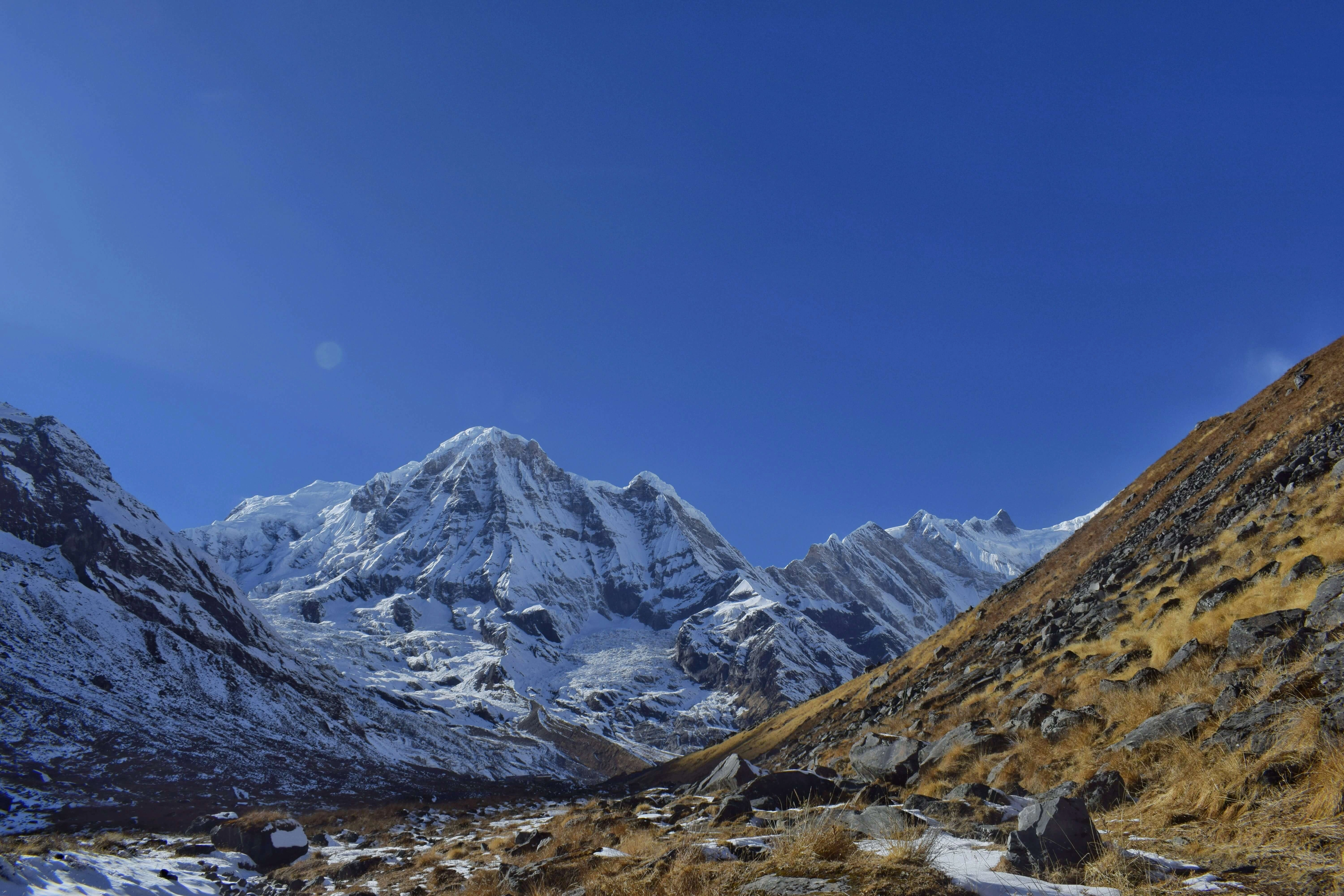
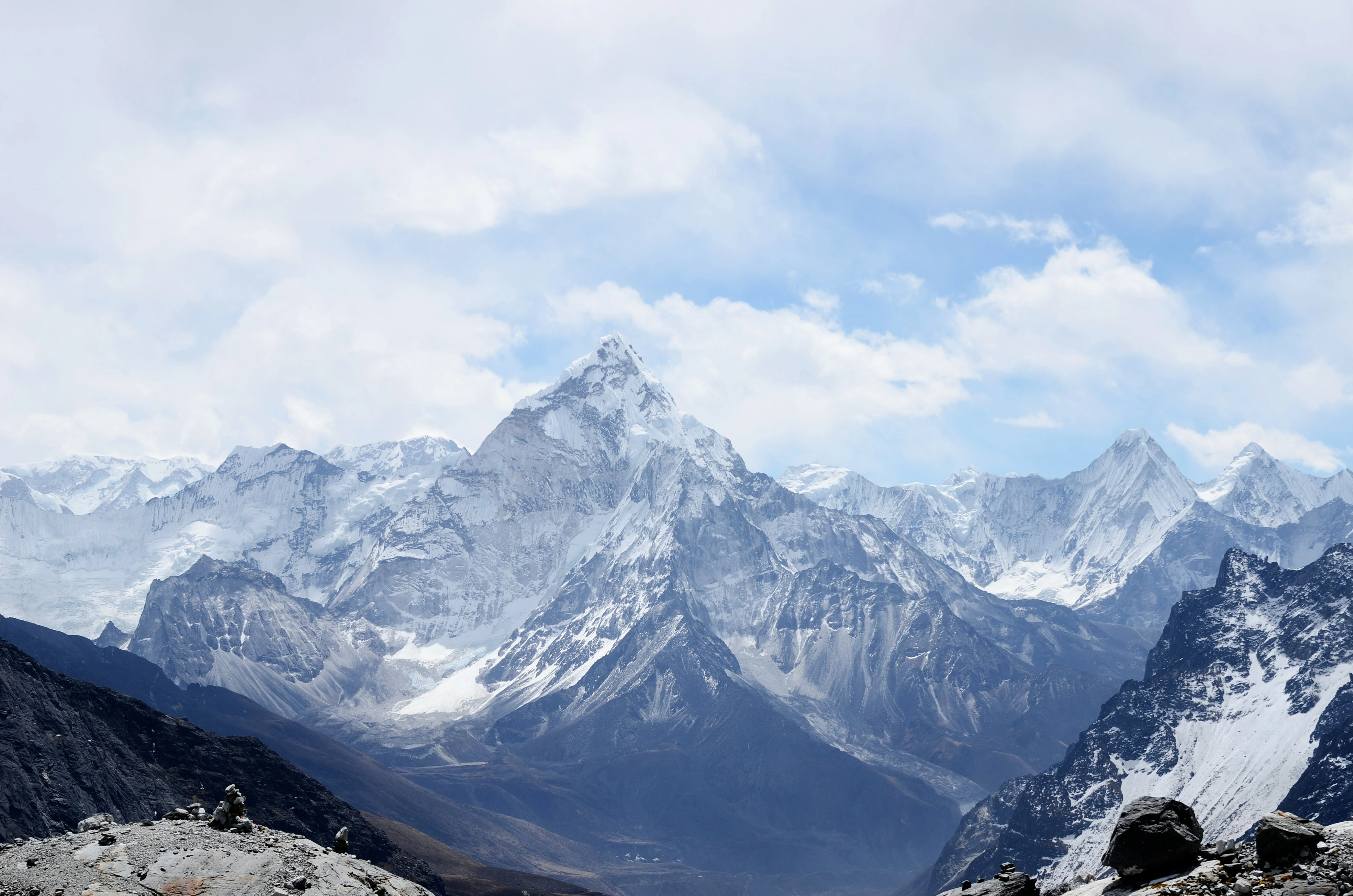
Climbing at high altitude demands more than strength and determination — it requires the right equipment, careful preparation, and the ability to respond to changing mountain conditions. Our IFMGA-certified mountain guides carry specialized gear not only for their own safety but for the well-being of the entire team. Their packs are carefully organized with technical climbing equipment such as harnesses, helmets, crampons, ice axes, carabiners, ascenders, descenders, and safety slings, allowing them to manage steep snow, ice, and glacier terrain. Depending on the route, they may also carry snow pickets, ice screws, and extra rope for protection and rescue situations. Safety Safety is always the top priority, so guides include a comprehensive high-altitude first aid kit, emergency bivy sack, crevasse rescue gear, and reliable communication devices such as satellite phones or radios. Navigation tools like GPS units and altimeter watches help maintain route accuracy, especially in poor visibility. Proper clothing is equally critical in extreme environments, and guides rely on a layering system that includes moisture-wicking base layers, insulating mid-layers, expedition-weight down jackets, and waterproof outer shells. They also carry multiple gloves, glacier sunglasses, goggles, and face protection to guard against wind, cold, and intense UV exposure. Navigation & Planning Tools Even on established routes, visibility can drop suddenly due to storms or whiteouts. Guides carry: Detailed route knowledge and maps GPS waypoints Weather updates via communication devices Climbing plan with turnaround times Decision-making tools are just as important as physical gear. At high altitude, the smallest item can make a life-saving difference. Our IFMGA guides pack with purpose, balancing weight with safety and efficiency. Their experience ensures that nothing essential is left behind — because in the mountains, preparation is everything.
Sep 15, 2025 Read Article →
Stay Connected