
MERA PEAK EXPEDITION
Home / MERA PEAK EXPEDITION
moderate

MERA PEAK EXPEDITION

duration icon
Duration
19 Days
altitude icon
Max Altitude
6,476m
group icon
Group Size
Max 2 - 6

Trip Description

Mera Peak sits at the head of the Hinku Valley in the Solu-Khumbu district of eastern Nepal, within Makalu Barun National Park — one of the world's most biologically diverse protected areas. The park encompasses high-altitude glaciers, pristine river valleys, dense rhododendron and bamboo forest, and an extraordinary range of wildlife including snow leopards, red pandas, Himalayan black bears, musk deer, and over 400 bird species. The Mera Peak approach passes directly through this landscape — an experience that goes well beyond a standard mountain approach.


The peak has three summits: Mera North (6,476m), Mera Central (6,461m), and Mera South (6,065m). Our expedition targets Mera North, the true high point reached via the Southeast Ridge from High Camp at 5,800m. The route above Khare crosses the Mera La, a high glaciated col, before ascending through open glacier terrain to High Camp. The summit push from High Camp follows the Southeast Ridge in a long, steady ascent with some crevasse crossings and a steeper final push to the top.


The Hinku Valley approach begins south of Lukla, diverging from the main Everest trail and dropping into a quieter, wilder corridor that most trekkers never see. The route passes through Surke La, CholimKharka, and Kothe before reaching Khare — the last settlement before the glacier begins. This approach is longer and more varied than the helicopter option used in the Luxury package, and many climbers find the full trek-in experience a deeply satisfying and important part of the expedition.

Trip Overview

Duration
Duration
19 Days
Including travel days
Max altitude
Max Altitude
6,476m
Summit of MERA PEAK EXPEDITION
Difficulty
Best Season
Spring & Autumn
Ideal climbing window
Group size
Group Size
Max 2 - 6
Small team support
Overview
Overview
Expedition
High-altitude guided climb
Book Now
Phone
Speak to an Expert
9843314253
Free cancellation up to 90 days before departure. No hidden fees.
Trip overview background

Detailed Itinerary

Your expedition representative meets you at Tribhuvan International Airport and transfers you to your hotel. The evening opens with a welcome dinner — an informal introduction to the team, the guide, and the journey that begins tomorrow.

Hotel

A full expedition briefing in the morning covers the route, safety protocols, equipment checks, and permit formalities. You receive your Alpinist Climber Expeditions duffel bag and cap at the team meeting. The afternoon is spent visiting UNESCO World Heritage Sites in Kathmandu — temples, stupas, and Newari courtyard architecture that provide a meaningful cultural start to the expedition.

Hotel

An early departure from Kathmandu by private jeep. The drive takes approximately seven to eight hours through the Nepali countryside, offering views of terraced farmland, river valleys, and distant peaks including Everest, Lhotse, Makalu, and Mera Peak itself on a clear day. Overnight at a local lodge in Patale Danda.

Lodge

Continuing by jeep through rugged mountain roads — the terrain becomes more remote and the road more demanding as the vehicle descends into the Solu-Khumbu foothills. Brief stops in local villages for tea and lunch provide a first real encounter with the traditional life of this part of Nepal. Overnight at a local lodge in Bung.

Lodge

The trek begins early from Bung. The trail climbs through rhododendron and pine forest toward Surke La, passing through the Sherpa village of Khiraule for a lunch break. With luck, wildlife including red pandas, musk deer, and Himalayan black bears inhabit this forest corridor. A briefing for the following day's activities is held over dinner at the lodge.

Lodge

From Surke La, the trail descends and climbs through dense forest where the biodiversity of Makalu Barun National Park is most apparent. The environment transitions from subtropical forest to more alpine terrain as the altitude rises. CholimKharka is reached after a full day of forest trekking — one of the most ecologically vivid sections of the entire approach.

Lodge

The trail steepens considerably today as it climbs above the tree line into rocky, exposed alpine terrain. The highest point of the day reaches approximately 4,500m before the path descends to Kholakharka. En route, the Panch Pokhari — a series of sacred glacial lakes — are visible from the trail. A long but rewarding day with expanding high-altitude views throughout.

Lodge

The route descends steeply through forest and across a river valley to Kothe — a small settlement at the entrance to the upper Hinku Valley. The national park permit and climbing permit checkpoint is located here. Kothe sits in a dramatic river setting surrounded by dense vegetation. The first views of Mera Peak's outline begin to appear from the upper sections of this day's trail.

Lodge

Leaving Kothe, the trail follows the Hinku Khola upstream through open valley terrain with yak grazing grounds and a traditional Buddhist monastery visible from the path. The Mera Peak massif grows larger with every step and surrounding 6,000-metre peaks begin to appear in all directions. Thangnak provides a comfortable overnight stop with excellent mountain views.

Lodge

The final approach to Khare — Mera Peak's Base Camp settlement — follows the rocky valley floor through dramatic high-altitude scenery. Khare sits beneath the Mera La at 4,900m, with single private rooms and hot shower facilities available at the lodge. This is the team's home for the next three nights, and the gateway to the technical climbing phase of the expedition.

Lodge

A structured rest and acclimatization day. The body is adapting rapidly to 4,900m and a day of relative rest — with a short hike above the lodge if conditions are good — significantly improves the quality of the acclimatization before training begins tomorrow. Hydration and nutrition are the priorities throughout the day.

Lodge

The team ascends to the Mera La (5,415m) for a structured technical training session in the actual terrain of the climb. The session covers crampon technique on glacier ice, ice axe use and self-arrest, fixed rope technique with jumar, and safe movement on crevassed glacier. Training at 5,415m in real terrain is the most effective preparation possible for the summit day. The team descends to Khare for the night, having gained critical acclimatization at altitude.

Lodge

From Khare, the route crosses the Mera La and ascends the open glacier to High Camp at 5,800m — one of the most celebrated viewpoints in the Everest region. Kanchenjunga, Chamlang, Makalu, Baruntse, Everest, Lhotse, and Nuptse all fill the horizon from this perch. Equipment is checked, a hot meal is prepared, and the team rests as early as possible in preparation for the pre-dawn summit start.

Camp

Summit day begins at approximately 2:30am. Moving by headlamp, the team dresses carefully, takes a light breakfast, and begins the ascent of the Southeast Ridge. The route climbs through open glacier terrain with some crevasse crossings that require confident rope and crampon technique. A steeper section leads to the base of the summit cone, where the angle increases before easing onto the broad summit plateau of Mera North at 6,476 metres.

From the summit, five 8,000-metre peaks are visible simultaneously — Everest, Lhotse, Makalu, Cho Oyu, and Kanchenjunga — spread across the horizon alongside Pumori, Baruntse, Ama Dablam, Chamlang, and dozens of other peaks. The descent returns to High Camp and then all the way down to Khare for the night.

Lodge

A reserve day for weather flexibility. If conditions prevented a safe summit on Day 14, today provides a second opportunity. If the summit was reached, this becomes a well-earned rest day at Khare before the return trek begins.

Lodge

The return trek begins through the Hinku Valley. The trail back to Kothe is familiar — seen now through the perspective of a completed summit. The drop in altitude brings a welcome return of energy and appetite.

Lodge

The trail ascends from Kothe through juniper and rhododendron forest toward Thulikharka — the high camp before the Zatrwa La Pass that leads back to Lukla on the final trekking day.

Lodge

An early start for the crossing of the Zatrwa La Pass (4,600m) before the trail descends to Lukla. From Lukla, an early flight returns the team to Kathmandu. The evening closes with a farewell dinner — a celebration of the summit and the journey through one of Nepal's finest and most remote valley approaches.

Hotel

Private airport transfer is arranged for your outbound flight. The Mera Peak Expedition concludes — with the summit, the Hinku Valley, and the five 8,000-metre peaks clearly in memory.

Why ACE?

Alpinist Climber Expeditions was built around a principle that has guided every climb we have organized — that the quality of the experience on a mountain is directly tied to the quality and depth of experience of the people leading it. What sets Alpinist Climber Expeditions apart is something that cannot be manufactured or replicated — it comes from decades spent on these mountains, from the culture that formed us, and from a deeply held belief that every climb deserves to be done properly.


We are a team of professional Sherpas. Not guides who have visited the Himalaya — guides who grew up here, who know these peaks in every season, and who have spent careers developing the technical skills and mountain judgment required to lead expeditions safely and successfully.


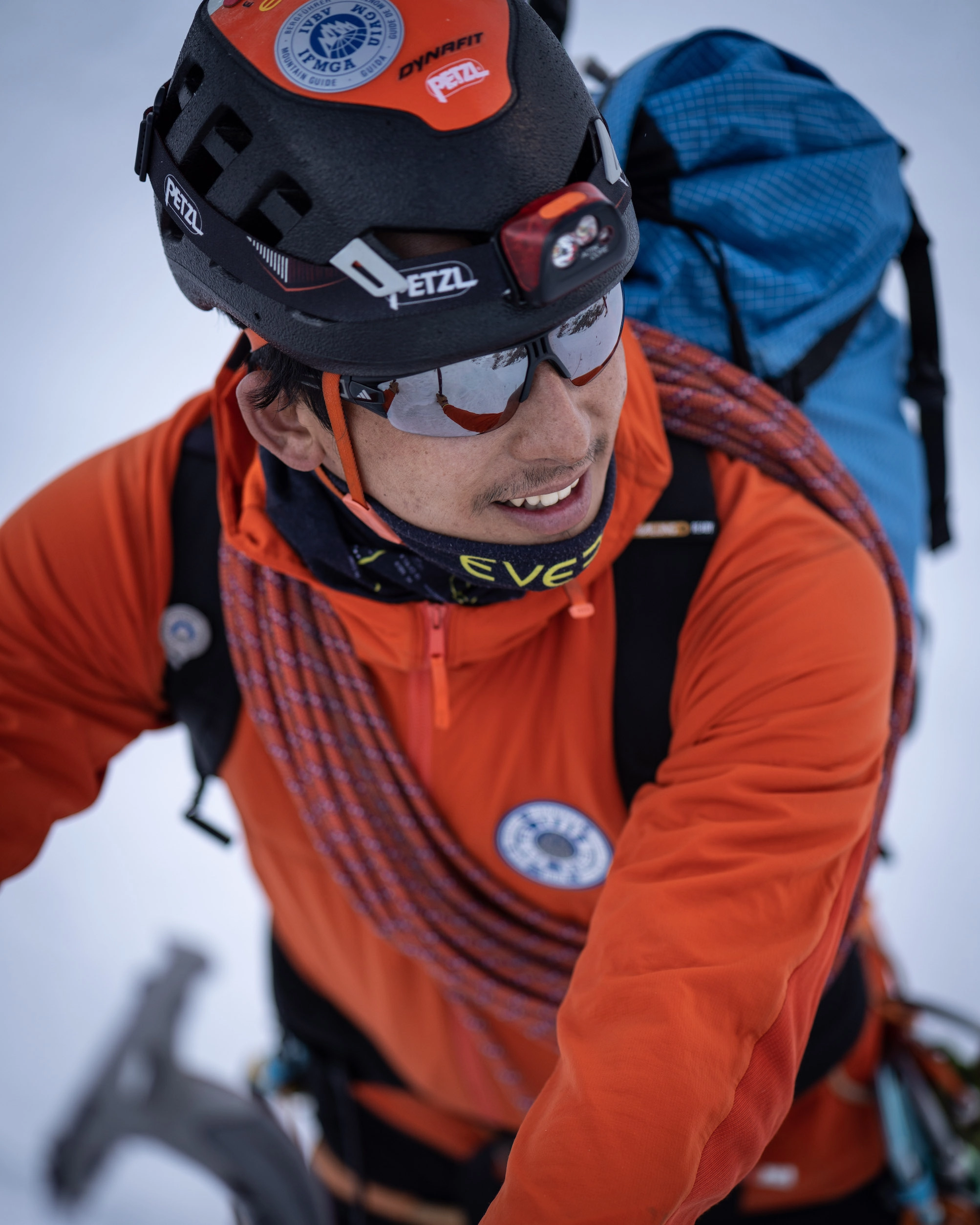
Our team holds IFMGA / UIAGM certification — the highest international standard in professional mountain guiding — alongside Advanced Mountaineering, Wilderness First Aid, Helicopter Rescue, and High-Altitude Rescue qualifications. Our lead guide has summited multiple 8,000-metre peaks, including ascents without supplemental oxygen. This is not a credential on paper. It is a lived capability that directly protects every climber who climbs with us.


We offer two expedition structures: a standard option with small-group expedition, and a premium option with 1:1 guide-to-client ratio. Both are built on the same standard of safety, preparation, and professionalism.The standard option maintains a minimum 1:3 guide-to-client ratio with a dedicated IFMGA lead guide and Sherpa support on every climb. Our premium 1:1 private option places you on the mountain directly alongside IFMGA Guide Mr. Prakash Sherpa.


We do not run high-volume operations as our clients are not bookings. They are climbers who have chosen to trust us with something significant and we take that trust seriously on every single expedition. We do not cut corners on acclimatization, staffing ratios, or safety equipment. We organize expeditions the way they should be organized — with patience, precision, and the kind of local knowledge that only comes from growing up in these mountains and spending a career on them.


The Team

Expedition Guides

Every guide on our team has been selected for their technical ability, high-altitude experience, and personal commitment to the safety and success of every climber they lead. All guides carry extensive experience at altitude and hold a proven record of safety, summit success, and strong compatibility with international clients.

The number of guides assigned to each expedition is determined by the size of the climbing team. Our standard guide-to-member ratio is 1:3, ensuring that every climber receives consistent, attentive support throughout the approach, the acclimatization phase, and the technical climb itself.


Climbing Sherpa Support

A dedicated team of experienced Climbing Sherpas supports every expedition with load carrying on the mountain, route preparation, and high camp management. On summit day, we maintain a 1:1 Sherpa-to-climber ratio — a commitment that reflects our belief that the summit push is where support matters most.

Our Climbing Sherpas are not simply load carriers. They are experienced high-altitude professionals who understand the mountain, the route, and the demands of summit day. Their presence alongside every climber on the final push is a core part of how we manage safety and success on the upper mountain.


What to Expect from Our Team

  • Technically qualified, IFMGA-certified lead guidance on every expedition
  • A standard guide-to-member ratio of 1:3 — adjusted based on team size and peak requirements
  • 1:1 Climbing Sherpa support on summit day for every team member
  • Guides who are experienced, companionable, and genuinely invested in your success
  • Full medical kit, satellite communication, and emergency response capability carried by the team at all times
  • A premium 1:1 private option available — summit alongside Mr. Prakash Sherpa directly


Trip Notes

  • Best seasons are spring (March to May) and autumn (September to November). Both offer stable weather and good summit conditions. Winter is possible but involves extreme cold above 5,000m.

  • The expedition runs for 19 days including the full approach trek through the Hinku Valley and the complete return to Lukla on foot. This is the standard, full-trek version of the Mera Peak expedition. For a helicopter return option, see the Mera Peak Luxury Expedition.

  • Accommodation is in lodges throughout the approach and descent. At Khare you stay in a single private room with hot shower. High Camp accommodation is in shared tents.

  • Group size is a minimum of 2 members with 1 IFMGA Mountain Guide, and a maximum of 6 members with 2 IFMGA Mountain Guides. The number of guides is determined by team size.

  • Mera Peak is rated Alpine Grade PD — a moderate climb. The summit day is physically demanding and long. Good cardiovascular fitness and basic glacier skills are required. Prior high-altitude experience is beneficial but not mandatory.

  • A free duffel bag and baseball cap are provided to every member at the expedition team meeting in Kathmandu. The duffel bag will be used to carry expedition supplies.

  • Bring your own daypack or backpack with a waterproof cover for daily use — for cash, documents, camera, notebook, snacks, and a change of clothing.

  • Non-expedition luggage can be stored safely at your hotel in Kathmandu. No need to carry it to Base Camp.

  • Guesthouses along the route may charge a small fee for charging electronic devices. Carry a power bank as backup.

  • Personal travel insurance with high-altitude rescue and medical evacuation coverage is mandatory. Ensure your policy covers peaks above 6,476m.

Equipment List

All personal clothing and climbing gear should be sourced, fitted, and tested before departure. Do not bring equipment you have not already used in the field.


Headwear

  • Sun hat or lightweight cap

  • Warm fleece or wool hat

  • UV-protective sunglasses (category 4 recommended)

  • Buff or thin balaclava / face mask


Handwear

  • Lightweight fleece or wool inner gloves

  • Gore-Tex outer mitten gloves


Clothing

  • Gore-Tex waterproof jacket

  • Gore-Tex waterproof trousers

  • Hiking trousers

  • Fleece jacket or warm mid-layer

  • Moisture-wicking base layer top

  • Thermal base layer trousers

  • Down jacket with hood


Footwear

  • Well broken-in trekking boots

  • Double-insulated alpine climbing boots

  • Crampons compatible with alpine boots

  • Snow gaiters

  • Trekking socks (4–5 pairs)

  • Camp sandals


Technical Climbing Equipment

  • Ice axe

  • Sit harness

  • Locking carabiners and belay device

  • Ascender (jumar)

  • Climbing helmet


Camping & Trekking Essentials

  • Sleeping bag rated to at least -20°C

  • 45-litre rucksack with rain cover

  • Large duffel bag with padlock

  • Headlamp with spare batteries

  • 1-litre water bottles (x2)

  • Thermos flask

  • Trekking poles

  • Personal first aid kit


Hygiene & Sun Protection

  • Waterproof wash bag

  • Medium towel

  • Toiletries — soap, toothbrush, toothpaste

  • Sunscreen SPF 50+ including lip balm

  • Hand sanitizer and handwash

  • Toilet paper and wet wipes

Includes background

Includes & Excludes

Included
  • Mera Peak climbing royalty fees
  • Makalu Barun National Park permit
  • TIMS card
  • Garbage disposal and environmental fees
  • All government taxes, VAT, and official tourism service charges
  • IFMGA-certified lead mountain guide — full wages and insurance
  • Experienced Climbing Sherpa support — wages, summit bonus, insurance, equipment
  • Porters at 1:1 member-to-porter ratio
  • All staff accommodation, wages, equipment, insurance, and medical provisions
  • 4-star hotel in Kathmandu with daily breakfast, welcome dinner, and farewell dinner (2 nights)
  • Full-board lodge accommodation throughout the trekking approach and descent
  • Single private room at Khare lodge with hot shower
  • High-altitude camp food for members and guides during the climbing phase
  • Round-trip Kathmandu to Lukla mountain flight
  • Private jeep — Kathmandu to Patale Danda and return from Lukla
  • Private vehicle airport transfers in Kathmandu
  • High Camp tents shared between members and guides
  • Medical kit and satellite phone throughout
  • Alpinist Climber Expeditions branded duffel bag, cap, and T-shirt per member
x Not Included
  • × International airfare
  • × Nepal entry visa fees
  • × Lunches and dinners in Kathmandu outside of the included welcome and farewell dinners
  • × Alcoholic and soft beverages
  • × Internet and WiFi access
  • × Personal clothing and climbing equipment
  • × Personal first aid kit
  • × Drone permit fees (if applicable)
  • × Personal travel, medical, and emergency rescue insurance
  • × Gratuities for guides, Climbing Sherpa, and porters

1:1 Experience with Your Lead Guide

Lead Guide

Prakash Sherpa

CEO

Our lead guide Prakash Sherpa oversees expedition strategy, pacing, and on-mountain decision-making so your climb is supported from preparation through summit push.

You get direct access to experienced guidance, real-time judgement in changing conditions, and a more focused expedition experience built around safety, clarity, and strong leadership.

IFMGA

Package Options

Normal Package

The Full Experience

USD 2,750
per person / twin sharing
  • 20-day guided expedition
  • All meals during trek
  • IFMGA-certified lead guide
  • 1 assistant guide
  • Teahouse/lodge accommodation
  • All permits and park fees
  • 2 porters per client
  • Group first aid kit
  • Emergency oxygen supply
  • Kathmandu airport transfers
  • All trekking route transport
  • Welcome & farewell dinners
  • Summit certificate
  • ACE expedition duffel bag
Book Standard
Premium Package

The Full Experience

USD 2,750
per person / twin sharing
  • 20-day guided expedition
  • All meals during trek
  • IFMGA-certified lead guide
  • 1 assistant guide
  • Teahouse/lodge accommodation
  • All permits and park fees
  • 2 porters per client
  • Group first aid kit
  • Emergency oxygen supply
  • Kathmandu airport transfers
  • All trekking route transport
  • Welcome & farewell dinners
  • Summit certificate
  • ACE expedition duffel bag
Book Premium

FAQs

Mera Peak (6,476m) is Nepal's highest trekking peak, located in the Hinku Valley of the Solu-Khumbu district within Makalu Barun National Park. It is one of Nepal's most popular climbing objectives, renowned for its summit panorama of five 8,000-metre peaks — Everest, Lhotse, Makalu, Cho Oyu, and Kanchenjunga. The peak was first summited in 1953 by Colonel Jimmy Roberts and Sen Tenzing and has been a celebrated Himalayan objective ever since.

ACE mountain background
N
Client Stories

From the Summit

Expedition Journal

Dispatches from the Mountains

All Articles
High Altitude Kit List: What our IFMGA Guides Actually Carry
Expedition Report

High Altitude Kit List: What our IFMGA Guides Actually Carry

Climbing at high altitude demands more than strength and determination — it requires the right equipment, careful preparation, and the ability to respond to changing mountain conditions. Our IFMGA-certified mountain guides carry specialized gear not only for their own safety but for the well-being of the entire team. Their packs are carefully organized with technical climbing equipment such as harnesses, helmets, crampons, ice axes, carabiners, ascenders, descenders, and safety slings, allowing them to manage steep snow, ice, and glacier terrain. Depending on the route, they may also carry snow pickets, ice screws, and extra rope for protection and rescue situations. Safety Safety is always the top priority, so guides include a comprehensive high-altitude first aid kit, emergency bivy sack, crevasse rescue gear, and reliable communication devices such as satellite phones or radios. Navigation tools like GPS units and altimeter watches help maintain route accuracy, especially in poor visibility. Proper clothing is equally critical in extreme environments, and guides rely on a layering system that includes moisture-wicking base layers, insulating mid-layers, expedition-weight down jackets, and waterproof outer shells. They also carry multiple gloves, glacier sunglasses, goggles, and face protection to guard against wind, cold, and intense UV exposure. Navigation & Planning Tools Even on established routes, visibility can drop suddenly due to storms or whiteouts. Guides carry: Detailed route knowledge and maps GPS waypoints Weather updates via communication devices Climbing plan with turnaround times Decision-making tools are just as important as physical gear. At high altitude, the smallest item can make a life-saving difference. Our IFMGA guides pack with purpose, balancing weight with safety and efficiency. Their experience ensures that nothing essential is left behind — because in the mountains, preparation is everything.
Sep 15, 2025 Read Article →
Stay Connected