
MOUNT EVEREST EXPEDITION
Home / MOUNT EVEREST EXPEDITION
extreme

MOUNT EVEREST EXPEDITION

duration icon
Duration
58 Days
altitude icon
Max Altitude
8,848m
group icon
Group Size
Max 2 - 6

Trip Description

Everest was first measured as the world's highest peak in 1852 during the Great Trigonometrical Survey of India. It was named after Sir George Everest, the British surveyor-general who oversaw the survey — though Everest himself reportedly objected to the naming. The mountain's current official height — 8,848.86 metres — was established by a joint Nepal–China survey in 2020.


The first successful ascent was made on 29 May 1953 by Edmund Hillary of New Zealand and Tenzing Norgay Sherpa of Nepal, climbing via the South Col route from the Nepal side. That same route — refined, better equipped, and supported by modern weather forecasting is the line that virtually all serious expeditions follow today.


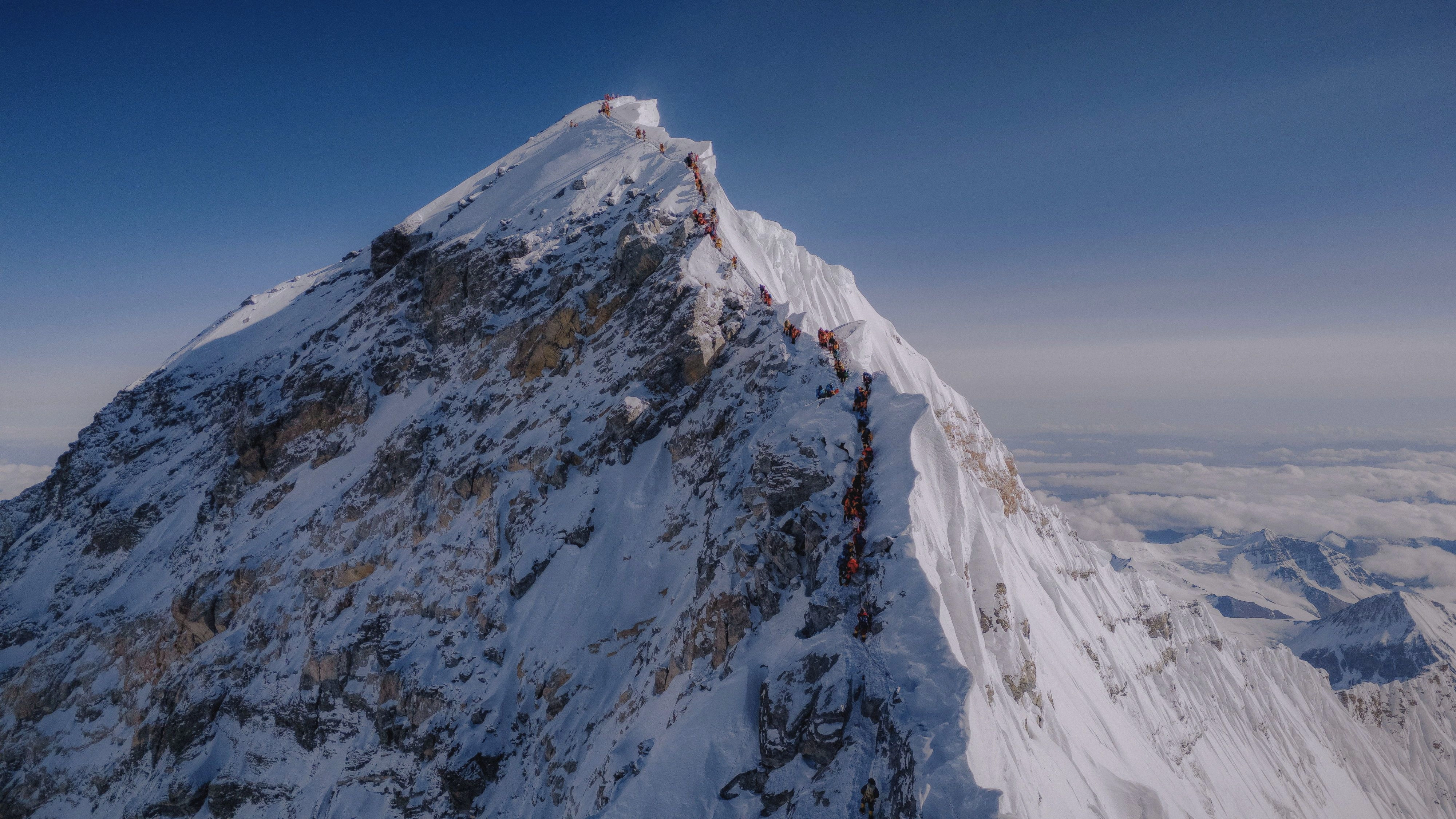
The South Col route moves through four distinct sections, each with its own character and demands. The Khumbu Icefall from Base Camp to Camp 1 is the most objectively dangerous section: a chaotic, constantly moving glacier field of crevasses, ice towers called seracs, and shifting ice blocks that must be crossed by ladder and fixed rope. It changes every season and cannot be made safe, only managed. The Western Cwm above Camp 1 is a relatively flat, high-altitude plateau that channels intense sunlight between the walls of Everest and Lhotse — hot in the day and bitterly cold at night. The Lhotse Face above Camp 2 is a steep blue-ice slope rising to Camp 3 at 7,200 metres, requiring crampon technique and fixed rope management on sustained ground. Above the South Col, the Southeast Ridge leads to the South Summit, then a narrow and exposed snow ridge to the Hillary Step — a short but serious rock and ice section just below the main summit at 8,848 metres.


The death zone, above 8,000 metres is the section of the mountain where the human body cannot recover from exertion. Oxygen at this altitude is roughly one third of what is available at sea level. Judgement is impaired. Movement is slow. The goal above Camp 4 is not to perform well, it is to maintain function long enough to reach the summit and descend before the body's reserves are depleted. Supplemental oxygen changes those odds significantly, which is why it is included without limit for every member and guide on this expedition.

Trip Overview

Duration
Duration
58 Days
Including travel days
Max altitude
Max Altitude
8,848m
Summit of MOUNT EVEREST EXPEDITION
Difficulty
Best Season
Spring
Ideal climbing window
Group size
Group Size
Max 2 - 6
Small team support
Region
Region
Khumbu Region
Expedition location
Overview
Overview
Expedition
High-altitude guided climb
Book Now
Phone
Speak to an Expert
9843314253
Free cancellation up to 90 days before departure. No hidden fees.
Trip overview background

Detailed Itinerary

A representative from Alpinist Climber Expeditions meets you at Tribhuvan International Airport and transfers you to your 4-star hotel. That evening, the full expedition team gathers for a welcome dinner. Mr. Prakash Sherpa introduces himself, the other team members, and the 58 days ahead. It is the first evening of the longest, highest, and most committed journey most climbers will ever undertake.

Hotel

A full expedition briefing in the morning covers everything — the South Col route from the Khumbu Icefall to the Hillary Step, the camp structure, oxygen system use, safety protocols, permit formalities, the acclimatization plan, the government liaison officer coordination, and how weather windows are tracked and acted on during the climbing period. Equipment is checked and confirmed. You receive your Alpinist Climber Expeditions duffel bag, cap, and T-shirt. The afternoon is a guided city tour of Kathmandu's UNESCO World Heritage Sites — Boudhanath Stupa, Pashupatinath Temple, and the ancient courtyards of Patan. A meaningful cultural grounding before the mountain begins.

Hotel

An early mountain flight from Kathmandu to Lukla (2,840m) — roughly 35 minutes of spectacular Himalayan scenery as the aircraft threads through the valley. In Lukla, the porter team is organized, loads are distributed, and the trek begins. The trail descends through pine forest along the Dudh Koshi River to Phakding — a gentle and colourful first trekking day along one of the world's most famous mountain trails.

Lodge

The trail follows the Dudh Koshi upstream, crossing high suspension bridges and passing through the Sagarmatha National Park checkpoint at Monjo before the steep two-hour climb to Namche Bazaar. Namche is the commercial centre of the Khumbu — a circular amphitheatre of shops, bakeries, lodges, and Sherpa culture at 3,440m. The first clear views of Everest appear above the ridge on the final approach if the morning is clear. This is where the expedition truly begins to feel real.

Lodge

A structured acclimatization day — one of several built into this approach for a reason. A morning hike to the Everest View Hotel ridge at approximately 3,800m follows the principle of climbing high and sleeping low. The ridge delivers the most famous view in the Khumbu: Everest, Lhotse, Nuptse, Ama Dablam, and Thamserku all in a single frame. Khumjung village above Namche is also worth visiting — the school built by Sir Edmund Hillary stands there, and the monastery holds what locals describe as a yeti skull. The afternoon is free in Namche.

Lodge

The trail descends from Namche through rhododendron forest before climbing to the Tengboche ridge and the most famous monastery in the Khumbu. Tengboche Monastery sits above the treeline with Ama Dablam rising directly behind it — one of the most photographed views in Nepal, and one that loses nothing in person. The monastery grounds are open to visitors, and the morning light on the surrounding peaks from the courtyard is exceptional. Overnight in Tengboche.

Lodge

The trail descends below Tengboche before climbing through Pangboche — one of the oldest Sherpa villages in the valley, with a monastery that predates Tengboche and a view of Ama Dablam's southeast face from the village lane that is as good as any in the range. The route continues to Pheriche at 4,371m — an open, sparse settlement in the upper Khumbu Valley where the air begins to thin noticeably and the altitude makes its presence felt properly for the first time.

Lodge

The second structured acclimatization day. The team hikes to the top of Nangkartshang peak at 5,083m above Pheriche — a three-hour walk on open, rocky terrain with views of Cholatse, Lobuche, Makalu, and the full eastern Khumbu that confirm just how far above the normal world this valley sits. The descent returns to Pheriche for the night. This hike is not optional — it is one of the most important altitude adaptation steps in the approach.

Lodge

The trail climbs from Pheriche through Dughla, passing the memorial chortens at Thokla — a row of stone monuments built in memory of climbers and Sherpas lost on these mountains over the decades. Each one has a name. The list is long. It is a sobering and important stop on any Everest approach, and the silence there carries a weight that affects everyone who passes. The climb continues to Lobuche at 4,940m.

Lodge

A shorter but increasingly demanding walk to Gorak Shep at 5,160m — the last settlement before Everest Base Camp and the highest permanently occupied point on this side of the mountain. The trail crosses the lateral moraine of the Khumbu Glacier, and the altitude is felt with every step. The bulk of Kala Patthar rises above the village, and Base Camp is less than two hours away. The team rests well for the final push to Base Camp the following morning.

Lodge

The final approach to Base Camp crosses glacial moraine on the Khumbu Glacier — a mix of rocky terrain and ice that climbs gently but continuously to Base Camp at 5,364m. The route weaves between ice blocks and over loose stone, and the first view of Base Camp — the community of bright coloured tents spread across the glacier below the Icefall — is a moment that every Everest climber remembers.

Our Base Camp is among the best-equipped on the mountain. Each member has their own private dome tent. Hot showers are available on request. The dining tent is carpeted and heated, with Wi-Fi and a movie screen. These are not luxuries for their own sake — they exist because a properly rested, well-fed, and comfortable team performs better at altitude than one living in marginal conditions. The month and a half ahead demands every physical and mental resource available. Base Camp is where those resources are maintained.

Camp

The Puja ceremony is conducted at Base Camp — a traditional Sherpa blessing led by a lama, attended by every member of the team, the Climbing Sherpas, the cooks, and all support staff. All climbing equipment is laid out and blessed before its first use on the mountain. Prayers are offered for safe passage, forgiveness for the disruption climbing causes to the mountain, and protection for everyone involved. The ceremony lasts two to three hours. It is not a formality — it is one of the most genuine and moving experiences of the full 58 days, and being present for it fully is part of what an Everest expedition is.

Camp

The climbing period spans 39 days and is managed entirely in the field by Mr. Prakash Sherpa. This is the heart of the expedition — the rotations, the rest periods, the waiting, the weather, and eventually the summit.

The structure follows the established South Col acclimatization model: initial Icefall crossings familiarize the team with the route and its hazards; a first rotation to Camp 1 (6,065m) at the top of the Icefall and then Camp 2 (6,400m) in the Western Cwm initiates high-altitude adaptation; a return to Base Camp and lower villages (Lobuche or Pheriche) for deep recovery; a second rotation reaching Camp 3 (7,200m) on the Lhotse Face; a further recovery period at Base Camp; and then the summit push — Camp 1, Camp 2, Camp 3, South Col Camp 4 (7,900m), and summit day.

Summit day begins at Camp 4 between 9 PM and midnight. The team moves through the night on the Southeast Ridge, past the South Summit, along the knife-edge ridge above, and up the Hillary Step — a short but serious mixed pitch at 8,790m that is the last technical obstacle before the summit plateau. The summit of Everest at 8,848.86 metres is reached, on average, between 6 AM and 9 AM on a good day. The descent returns to Camp 4 the same day, and to Camp 2 or Base Camp the following day.

Unlimited supplemental oxygen is used above Camp 2 for all members and guides throughout the full climbing period. Weather forecasting is monitored daily through professional meteorological services. All movement decisions — when to push, when to rest, when to descend — are made by Mr. Prakash Sherpa based on current data and direct field observation.

Camp

Base Camp is cleaned and broken down. Tents are struck, equipment packed, and the site left in accordance with the expedition's environmental standards and Sagarmatha National Park regulations. The team descends to Lobuche — the first lodge night since arriving at Base Camp nearly six weeks ago. The altitude drop from 5,364m to 4,940m is felt as relief.

Lodge

The return trek moves south through the upper Khumbu, passing back through Lobuche and descending to Pangboche. The same trail walked on the way up looks entirely different from this direction — and from the other side of the summit. The lower altitude, the warmth, and the familiar trail feel like a different world after the weeks above 5,000m.

Lodge

The route continues through Tengboche and back down to Namche Bazaar. The descent through the rhododendron forest and across the Imja Khola is easy and pleasant walking. Namche's lodges, bakeries, and restaurants are a genuine comfort after the weeks of expedition life. The team rests well for the last trekking day to Lukla.

Lodge

The final trekking day follows the Dudh Koshi downstream from Namche through Phakding and the lower Khumbu forest to Lukla. Porters are thanked and bid farewell in Lukla. The last evening on the trail.

Lodge

An early morning flight from Lukla returns the team to Kathmandu. The city's noise, warmth, and lower altitude are a dramatic contrast to the 55 days preceding this moment. The afternoon is free for rest, shopping in Thamel, or a final exploration of the city.

Hotel

A free day in Kathmandu for recovery and personal time. A farewell dinner in the evening is the formal celebration of the expedition — 57 days, the world's highest mountain, and an experience that very few people in human history have had. Whatever happened on the mountain, the commitment, the preparation, and the effort that brought a team to this point are worth celebrating honestly.

Hotel

Private airport transfer is arranged for your international flight home. The Mount Everest Expedition concludes. Whatever you take home from this mountain — a summit, an attempt that reached the limits of what was safe, or the experience of the approach itself — it will stay with you permanently.

Why ACE?

Alpinist Climber Expeditions was built around a principle that has guided every climb we have organized — that the quality of the experience on a mountain is directly tied to the quality and depth of experience of the people leading it. What sets Alpinist Climber Expeditions apart is something that cannot be manufactured or replicated — it comes from decades spent on these mountains, from the culture that formed us, and from a deeply held belief that every climb deserves to be done properly.


We are a team of professional Sherpas. Not guides who have visited the Himalaya — guides who grew up here, who know these peaks in every season, and who have spent careers developing the technical skills and mountain judgment required to lead expeditions safely and successfully.


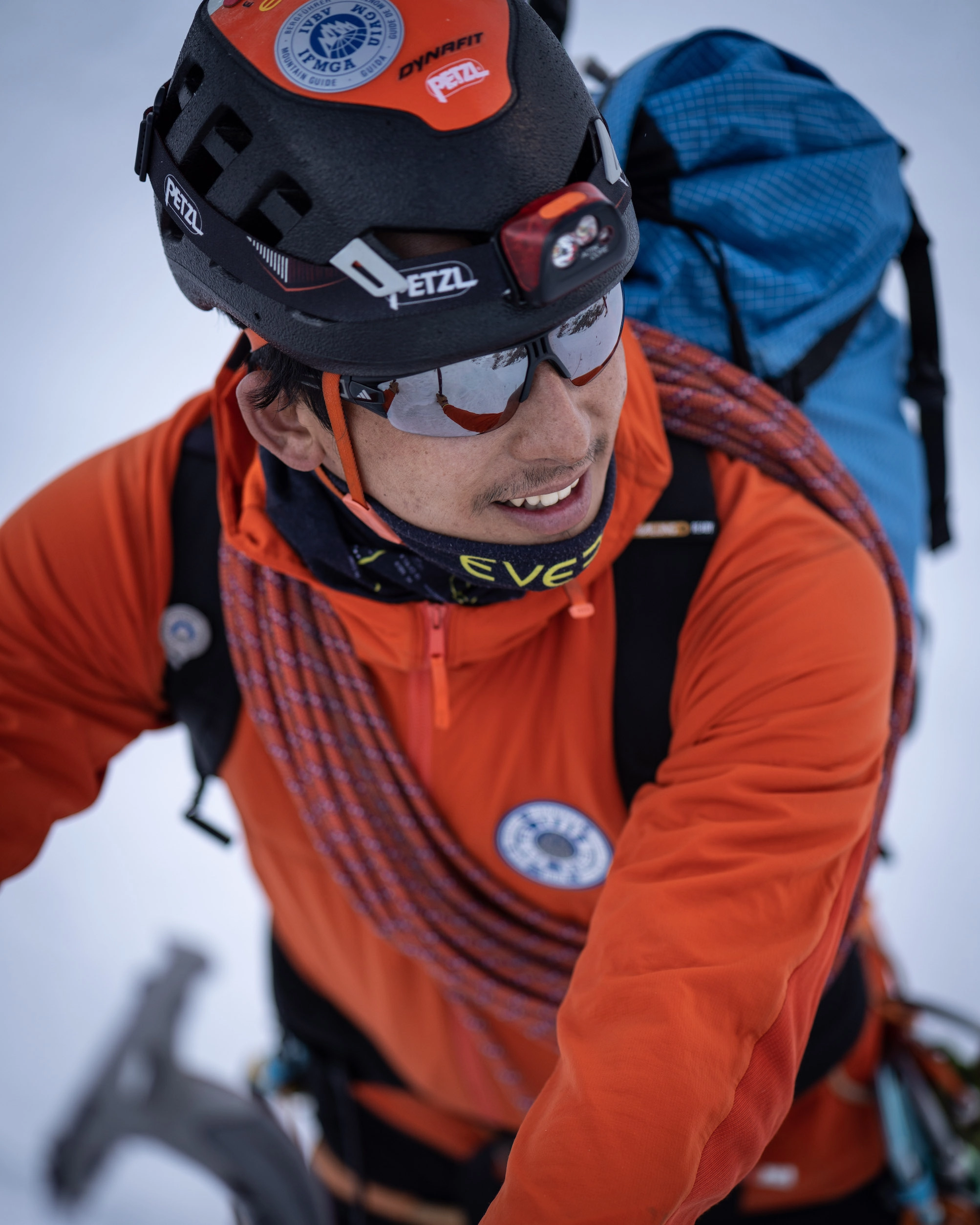
Our team holds IFMGA / UIAGM certification — the highest international standard in professional mountain guiding — alongside Advanced Mountaineering, Wilderness First Aid, Helicopter Rescue, and High-Altitude Rescue qualifications. Our lead guide has summited multiple 8,000-metre peaks, including ascents without supplemental oxygen. This is not a credential on paper. It is a lived capability that directly protects every climber who climbs with us.


We offer two expedition structures: a standard option with small-group expedition, and a premium option with 1:1 guide-to-client ratio. Both are built on the same standard of safety, preparation, and professionalism.The standard option maintains a minimum 1:3 guide-to-client ratio with a dedicated IFMGA lead guide and Sherpa support on every climb. Our premium 1:1 private option places you on the mountain directly alongside IFMGA Guide Mr. Prakash Sherpa.


We do not run high-volume operations as our clients are not bookings. They are climbers who have chosen to trust us with something significant and we take that trust seriously on every single expedition. We do not cut corners on acclimatization, staffing ratios, or safety equipment. We organize expeditions the way they should be organized — with patience, precision, and the kind of local knowledge that only comes from growing up in these mountains and spending a career on them.


The Team

Expedition Guides

Every guide on our team has been selected for their technical ability, high-altitude experience, and personal commitment to the safety and success of every climber they lead. All guides carry extensive experience at altitude and hold a proven record of safety, summit success, and strong compatibility with international clients.

The number of guides assigned to each expedition is determined by the size of the climbing team. Our standard guide-to-member ratio is 1:3, ensuring that every climber receives consistent, attentive support throughout the approach, the acclimatization phase, and the technical climb itself.


Climbing Sherpa Support

A dedicated team of experienced Climbing Sherpas supports every expedition with load carrying on the mountain, route preparation, and high camp management. On summit day, we maintain a 1:1 Sherpa-to-climber ratio — a commitment that reflects our belief that the summit push is where support matters most.

Our Climbing Sherpas are not simply load carriers. They are experienced high-altitude professionals who understand the mountain, the route, and the demands of summit day. Their presence alongside every climber on the final push is a core part of how we manage safety and success on the upper mountain.


What to Expect from Our Team

  • Technically qualified, IFMGA-certified lead guidance on every expedition
  • A standard guide-to-member ratio of 1:3 — adjusted based on team size and peak requirements
  • 1:1 Climbing Sherpa support on summit day for every team member
  • Guides who are experienced, companionable, and genuinely invested in your success
  • Full medical kit, satellite communication, and emergency response capability carried by the team at all times
  • A premium 1:1 private option available — summit alongside Mr. Prakash Sherpa directly


Trip Notes

  • The best season for Everest is spring — March through May. May is the primary summit window, when the jet stream shifts north of the peak and creates the stable, lower-wind conditions that make safe summit attempts possible. The pre-monsoon window typically lasts from late April through the third week of May, with the best days concentrated in a one to two week period. This window varies by year and is tracked throughout the expedition using professional weather forecasting services.

  • The expedition runs for 58 days from arrival in Kathmandu to final departure. This duration accounts for the nine-day trek approach, the Puja ceremony, the full acclimatization and climbing period, and the seven-day return to Kathmandu. It cannot be meaningfully shortened without compromising acclimatization.

  • Base Camp is one of the best-equipped on the mountain: private dome tent per member, hot showers on request, heated carpeted dining tent with Wi-Fi and a movie screen. A comfortable Base Camp is not a luxury — it is a performance tool that keeps the team rested and healthy across a 40-day climbing period.

  • Group size is a minimum of 2 members and a maximum of 6 members. The team is deliberately kept small to ensure access to the best summit windows and to maintain the standard of individual attention from the guide team.

  • Prior experience above 7,000 metres — ideally on a technical 7,000m or 8,000m peak — is required. Recommended preparation peaks include Cho Oyu, Manaslu, Baruntse, or Lhotse. Candidates without prior high-altitude expedition experience above 7,000m are not suitable for this programme. Please speak with us directly to discuss your background and readiness.

  • Acclimatization on this expedition includes two separate rest days during the approach trek — at Namche Bazaar (Day 05) and Pheriche (Day 08). Both are essential and cannot be skipped. The Nangkartshang hike to 5,083m on Day 08 is mandatory for all team members.

  • A free duffel bag, cap, and T-shirt are provided to every member at the expedition team meeting in Kathmandu. Non-expedition luggage can be stored at your hotel in Kathmandu throughout the 58 days.

  • Bring your own daypack with a waterproof cover for all trek stages. Keep cash, documents, camera, notebook, and a change of clothing in your daypack. Guesthouses on the route charge a small fee for charging electronic devices — carry a power bank.

  • Personal travel insurance with high-altitude rescue and medical evacuation coverage is mandatory for all participants. Your policy must cover technical mountaineering at altitudes above 8,848m and must include helicopter rescue to Kathmandu. This must be confirmed and documented before departure for Nepal.

Equipment List

Everest demands the highest quality personal gear available. You will spend time above 7,000 metres, nights at the South Col in temperatures that can reach -50°C with wind chill, and a summit day at 8,848 metres. Every item on this list should come from a reputable manufacturer, be rated for extreme cold, and be tested in the field before you arrive in Nepal. Nothing should come out of its packaging for the first time at Base Camp.


Clothing

  • Expedition down suit — highest grade available (Rab, Mountain Hardwear, or equivalent)

  • Expedition down jacket — best available brand

  • Waterproof Gore-Tex jacket and over-trousers — fitting over alpine boots

  • Balaclava fully covering nose and face — BUFF or equivalent

  • Long sleeve thermal shirt and trousers — moisture-wicking

  • Fleece jacket and fleece trousers


Handwear & Footwear

  • Thin liner gloves — warm and close-fitting

  • Down mitts — required above Camp 3

  • Gore-Tex Primaloft insulated gloves

  • Mountain gloves — waterproof and windproof

  • Smartwool mountaineering socks (2 pairs — new)

  • Ultra-soft running or hiking socks (2 pairs — new)

  • High-altitude mountaineering boots — La Sportiva G2 Evo or equivalent

  • Alpine boots for lower camp and lodge stages — La Sportiva or Scarpa


Technical Climbing Equipment

  • UIAA-tested climbing helmet — Petzl or BD

  • Sit harness — Petzl or BD

  • Ski goggles with UV protection and anti-fog system

  • UV-protective sunglasses

  • Headlamp with spare Energizer Ultimate Lithium batteries — Petzl or BD

  • Ascender (jumar) — Petzl or BD

  • Abseiling device (ATC guide) — Petzl or BD

  • Screw gate carabiners — 2 large, 2 small (Petzl or BD)

  • Bent gate carabiners — 2 medium (Petzl or BD)

  • 6mm cord — 2 metres, UIAA tested

  • 6mm cord — 5 metres, UIAA tested

  • Dynamic 8mm rope — 2 metres, UIAA tested

  • Ice axe — classic alpine type (Petzl, Grivel, or BD)

  • Crampons compatible with high-altitude boots (Grivel, Petzl, or BD)


General Equipment

  • Sleeping bag rated to -20°C or colder

  • 45–75 litre rucksack

  • Large duffel bag with padlock

  • Headlamp with spare batteries

  • 1-litre water bottles (x2)

  • 1-litre stainless steel thermos rated for extreme cold

  • Personal first aid kit

  • Trekking poles

  • Swiss army knife or Leatherman multi-tool

Includes background

Includes & Excludes

Included
  • Unlimited oxygen and Mask regulator for member and guide
  • Camp 1, Camp 2, Camp 3, and South Col tents for members and guides
  • Porters to carry trekking and expeditions gear (1:1 ratios)
  • Medical kit during the trip
  • Accommodation & food in the local lodge are on full board during the trip
  • Base Camp single Dome tent per person and hot shower
  • Flight from Kathmandu to Lukla both way
  • 4-star hotel in Kathmandu with breakfast for 4 nights
  • Hotel / Airport pick up and drop by private tourist vehicle
  • Summit route fixing and SPCC fees
  • Sagarmatha National Park permit and Tims entry fees
x Not Included
  • × International flight tickets
  • × Nepal entry visa fees
  • × Meals in Kathmandu
  • × Alcoholic beverages
  • × Internet wifi
  • × Personal clothing and climbing equipment
  • × Climbing Sherpa summit bonus
  • × Personal travel insurance, medical and rescue insurance
  • × Tips for Staff Guide, Sherpa, and Porters

1:1 Experience with Your Lead Guide

Lead Guide

Prakash Sherpa

CEO

Our lead guide Prakash Sherpa oversees expedition strategy, pacing, and on-mountain decision-making so your climb is supported from preparation through summit push.

You get direct access to experienced guidance, real-time judgement in changing conditions, and a more focused expedition experience built around safety, clarity, and strong leadership.

IFMGA

Package Options

Normal Package

The Full Experience

USD 2,750
per person / twin sharing
  • 20-day guided expedition
  • All meals during trek
  • IFMGA-certified lead guide
  • 1 assistant guide
  • Teahouse/lodge accommodation
  • All permits and park fees
  • 2 porters per client
  • Group first aid kit
  • Emergency oxygen supply
  • Kathmandu airport transfers
  • All trekking route transport
  • Welcome & farewell dinners
  • Summit certificate
  • ACE expedition duffel bag
Book Standard
Premium Package

The Full Experience

USD 2,750
per person / twin sharing
  • 20-day guided expedition
  • All meals during trek
  • IFMGA-certified lead guide
  • 1 assistant guide
  • Teahouse/lodge accommodation
  • All permits and park fees
  • 2 porters per client
  • Group first aid kit
  • Emergency oxygen supply
  • Kathmandu airport transfers
  • All trekking route transport
  • Welcome & farewell dinners
  • Summit certificate
  • ACE expedition duffel bag
Book Premium

FAQs

The Alpinist Climber Expeditions Everest expedition runs for 58 days from arrival in Kathmandu to final departure. This includes nine days trekking from Lukla to Base Camp, a Puja ceremony day, approximately 39 days of climbing and acclimatization rotations, and seven days for the return trek and flights to Kathmandu. The actual summit push typically takes three to four days from Base Camp — but the full 58-day duration is what makes that push safe. Rushed acclimatization is one of the most common reasons teams fail to summit or suffer serious altitude illness.

ACE mountain background
N
Client Stories

From the Summit

Expedition Journal

Dispatches from the Mountains

All Articles
High Altitude Kit List: What our IFMGA Guides Actually Carry
Expedition Report

High Altitude Kit List: What our IFMGA Guides Actually Carry

Climbing at high altitude demands more than strength and determination — it requires the right equipment, careful preparation, and the ability to respond to changing mountain conditions. Our IFMGA-certified mountain guides carry specialized gear not only for their own safety but for the well-being of the entire team. Their packs are carefully organized with technical climbing equipment such as harnesses, helmets, crampons, ice axes, carabiners, ascenders, descenders, and safety slings, allowing them to manage steep snow, ice, and glacier terrain. Depending on the route, they may also carry snow pickets, ice screws, and extra rope for protection and rescue situations. Safety Safety is always the top priority, so guides include a comprehensive high-altitude first aid kit, emergency bivy sack, crevasse rescue gear, and reliable communication devices such as satellite phones or radios. Navigation tools like GPS units and altimeter watches help maintain route accuracy, especially in poor visibility. Proper clothing is equally critical in extreme environments, and guides rely on a layering system that includes moisture-wicking base layers, insulating mid-layers, expedition-weight down jackets, and waterproof outer shells. They also carry multiple gloves, glacier sunglasses, goggles, and face protection to guard against wind, cold, and intense UV exposure. Navigation & Planning Tools Even on established routes, visibility can drop suddenly due to storms or whiteouts. Guides carry: Detailed route knowledge and maps GPS waypoints Weather updates via communication devices Climbing plan with turnaround times Decision-making tools are just as important as physical gear. At high altitude, the smallest item can make a life-saving difference. Our IFMGA guides pack with purpose, balancing weight with safety and efficiency. Their experience ensures that nothing essential is left behind — because in the mountains, preparation is everything.
Sep 15, 2025 Read Article →
Stay Connected